
The “P” in DAP: A Whitley County Innovation
by Pam Koch, Whitley County Historical Museum curator
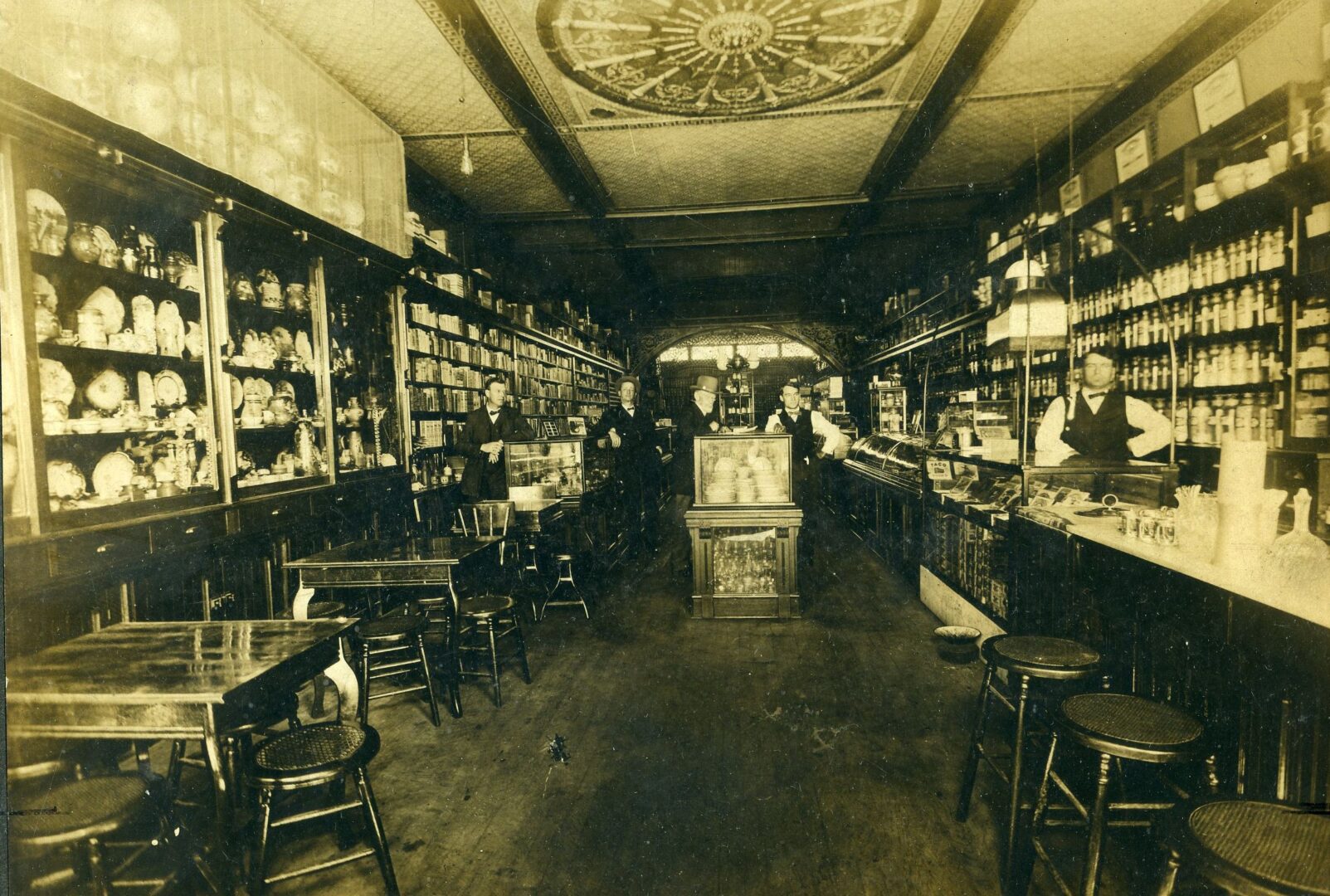
This Columbia City drugstore invention from the 1800s still impacts homes across America. In 1886 George Pontius has purchased the W H Smith drugstore, the city’s leading drugstore. He maintained that reputation throughout his ownership.
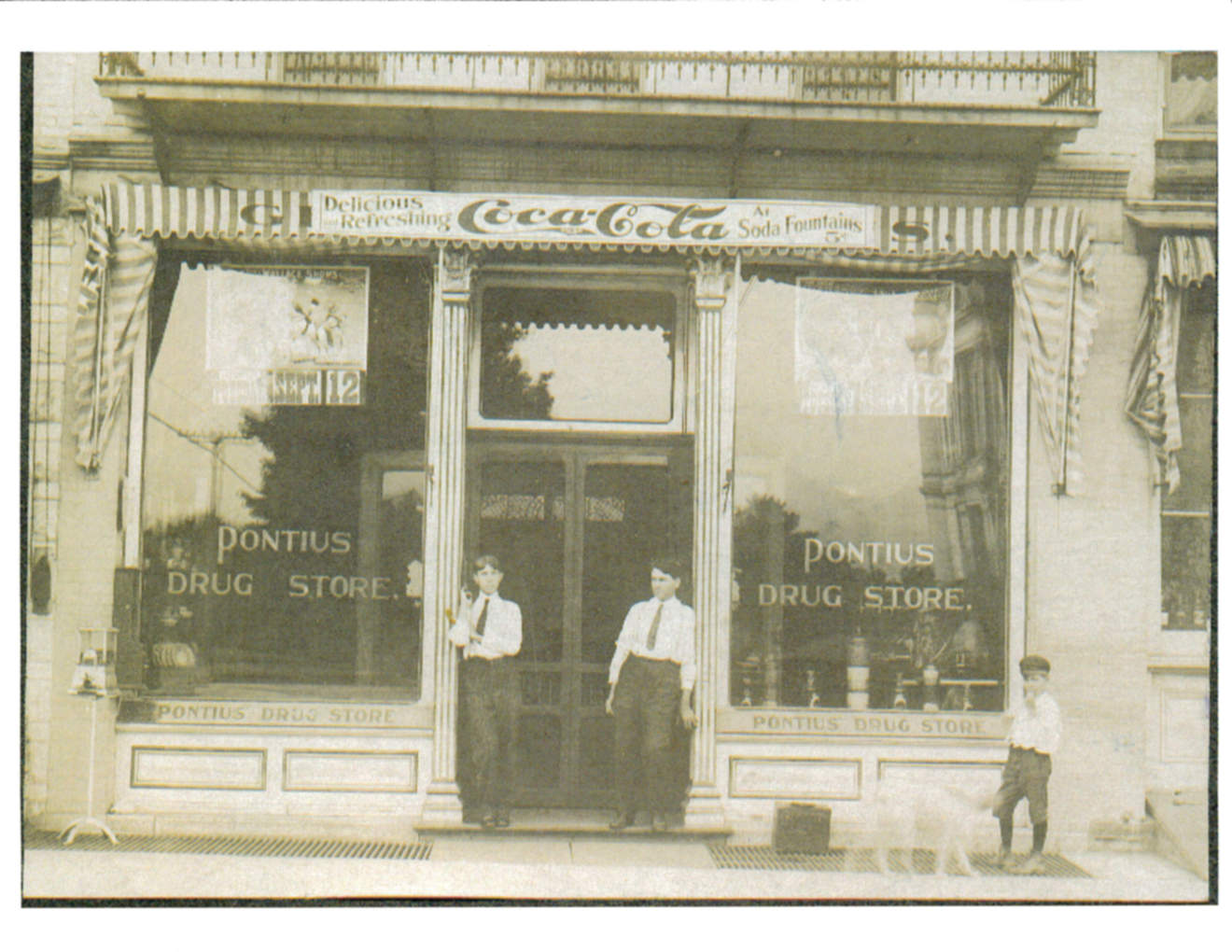
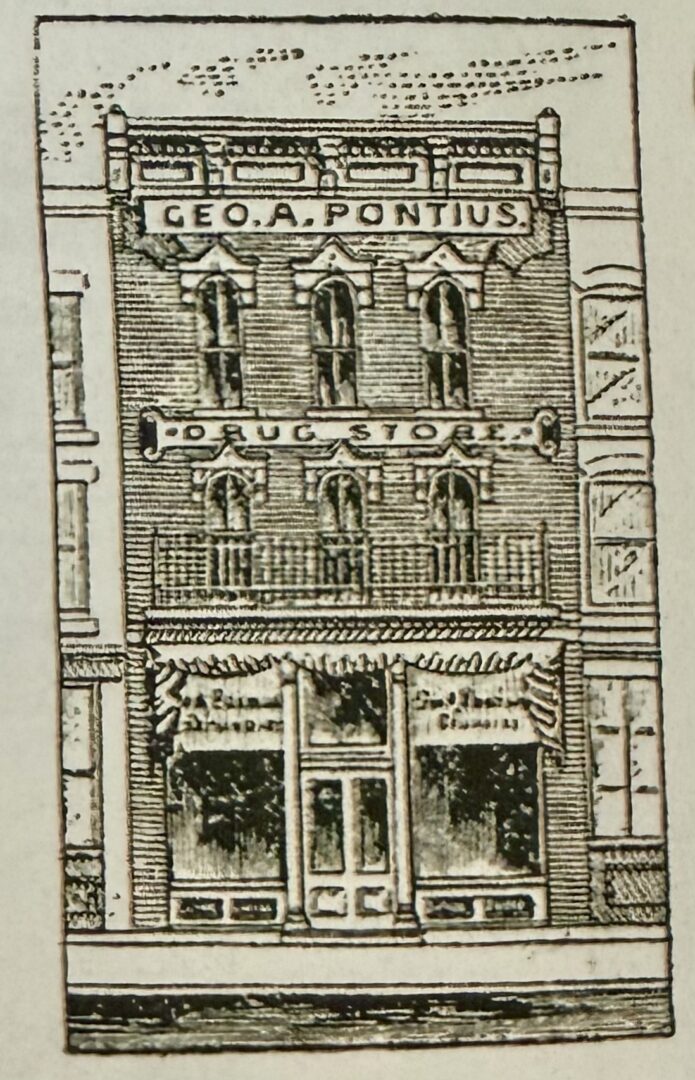
At this time, women preserved their garden producing cans, which were then sealed with wax as this was before glass canning jars. Mr. Pontius had created a sealing wax that was in great demand. Dixon Wiggins & Co. of Dayton, Ohio wanted to purchase the Pontius patent on the sealing wax. Pontius, unwilling to sell the patent, instead sold his drugstore to John Meir and John Keiser who had worked for him. Pontius then became a partner in Dicks and Wiggins Co.
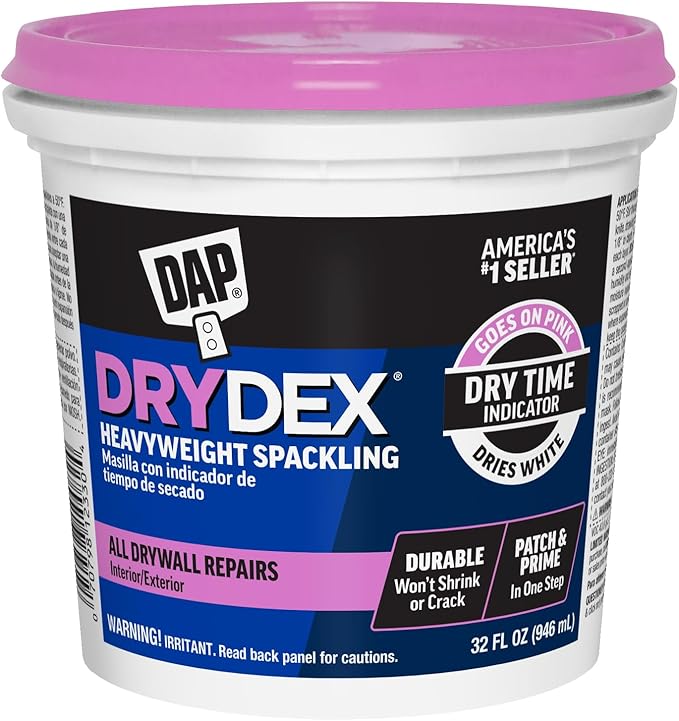
Today, when you purchased DAP to repair a hole in your wall, the P stands for Pontius.
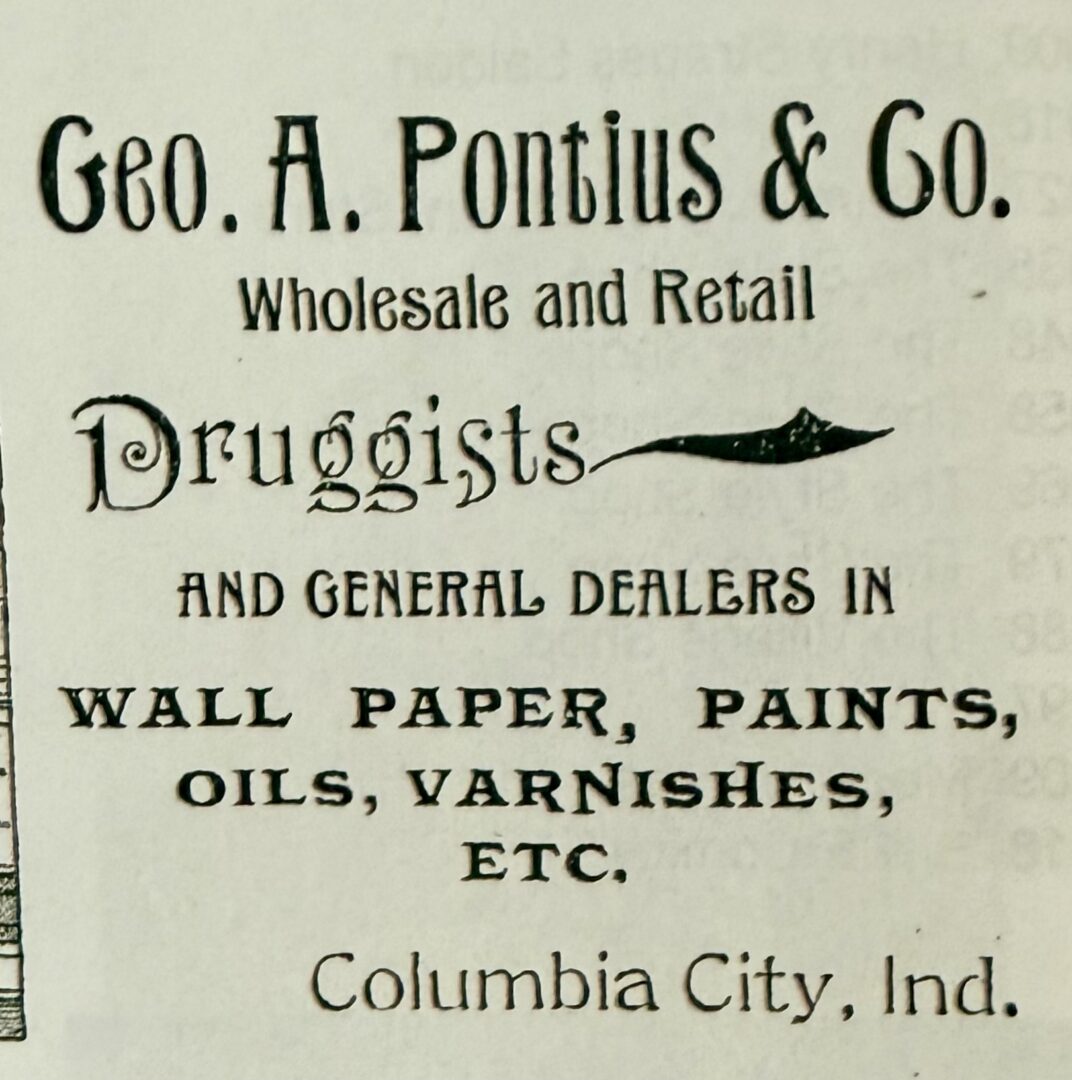
Excerpt from Around the Square by Pam Koch. Published by and available for purchase at the Whitley County Historical Museum.
𝑾𝒉𝒆𝒓𝒆 𝒂𝒓𝒆 𝑾𝒆: 𝑨𝒓𝒄𝒉𝒊𝒕𝒆𝒄𝒕𝒖𝒓𝒂𝒍 𝑯𝒊𝒔𝒕𝒐𝒓𝒚
This entablature is found at the top of 128 West Van Buren Street now the home of the Visitors Bureau.
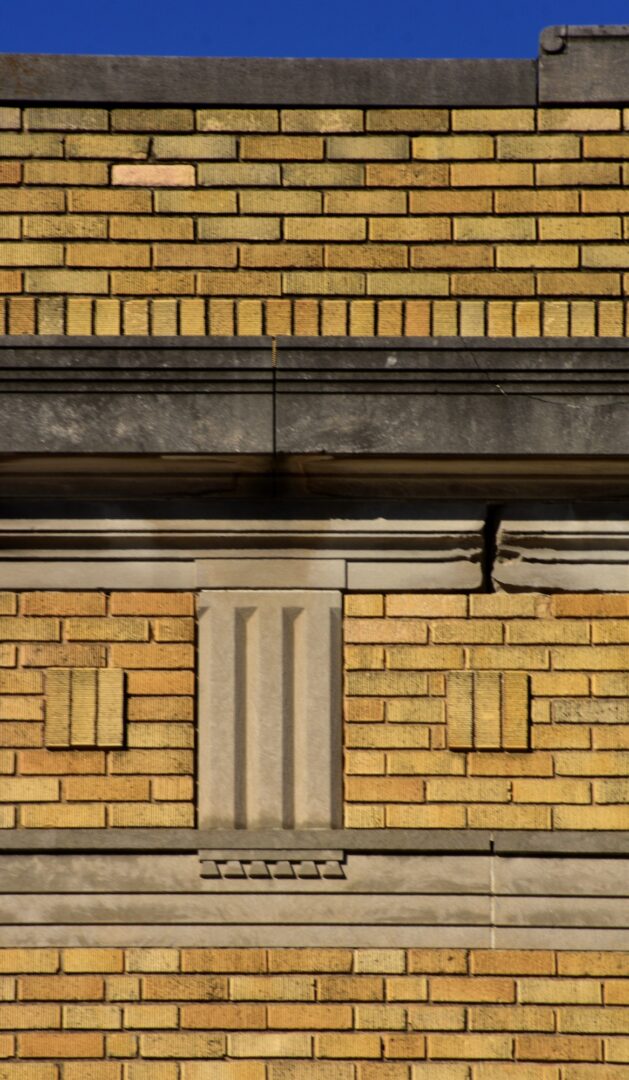
As may be expected for a neoclassical style building, the entablature has the essence of the classical definition in which three bands of horizontal decorative elements rest atop columns. Here though, the columns and their capitals are only suggested by the cut stone blocks. The three bands are identifiable, although stylized as a stone architrave, a plain brick frieze, and a more subtle stone cornice. Unique is the oval cartouche at the center.
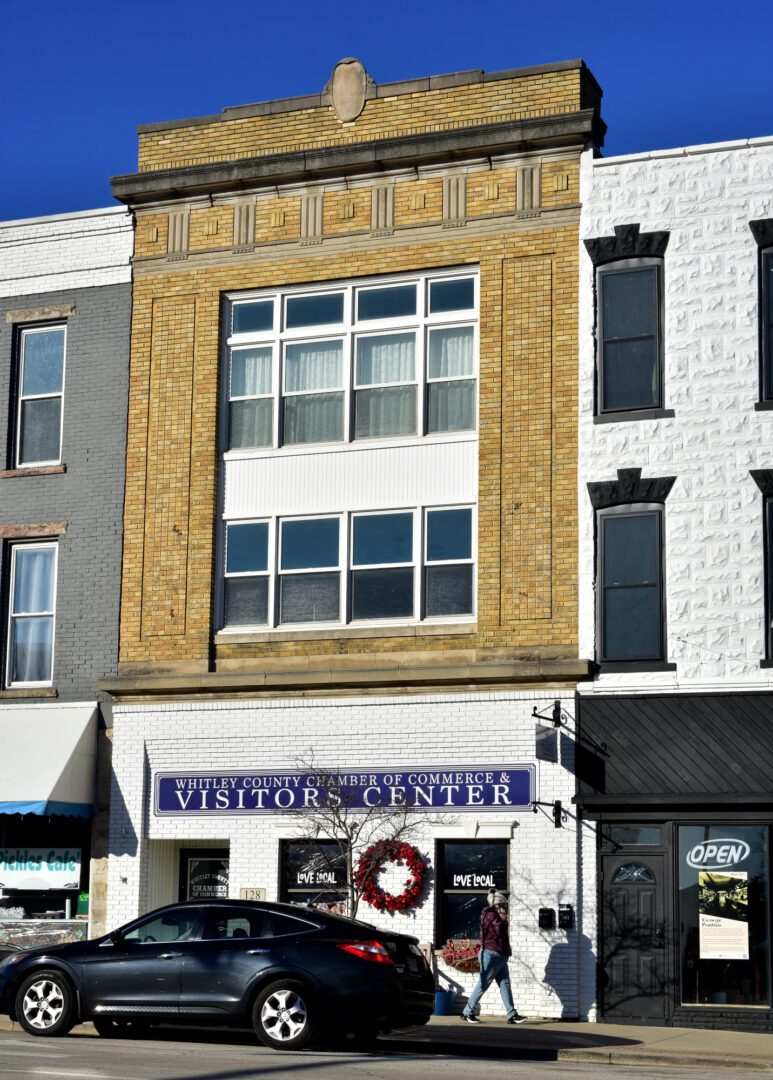
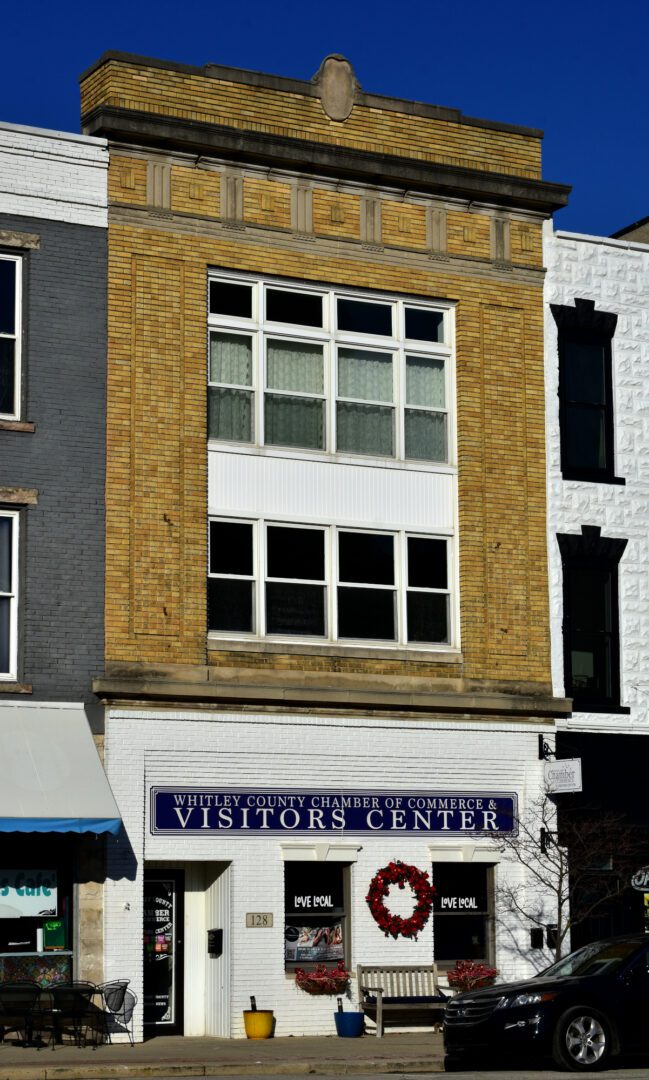
128 W. Van Buren St, Downtown Columbia City. Photo by Nathan Bilger, January 2026
Thank you to Nathan Bilger for providing the recent photos and valuable insights into the architectural history.
For more Columbia City History, check out the Windows into History series at the Columbia City Connect’s website: Windows into History Archives – Columbia City Connect