The Saloon on the Corner
Around 1892, John Rhoads opened a tavern and restaurant on the southeast corner of Ellsworth and Main Streets in downtown Columbia City. He also operated a large livery barn not far away that was capable of housing 50 horses. His children grew up in the family business and would eventually have successful businesses of their own in downtown Columbia City. Rhoads must have been quite successful in his work over the years because, upon his death in 1912, a large marble monument was purchased at a cost of $1000 for his grave in Clear Creek Cemetery in Huntington County. That would be about $35,000 in today’s money. He had operated a saloon in Columbia City for 20 years and before that, operated a saloon in Laotto.
After his retirement in 1910, his daughter, Effie Rhoads, and her husband, James Henderson Coplen, operated a restaurant in that location for several years. By 1915, they had moved to Battle Creek, Michigan.
Ownership of the building and property to two of John Rhoads’ sons, Jesse and Albert Rhoads, who operated a very successful restaurant, tavern and pool room on north side of the Courthouse Square for decades. They continued to lease the space at Main and Ellsworth to other entrepreneurs up until 1956 when Albert Rhoads sold the property to Wave and Blanche Cook which they used to connect to their existing bowling alley next door. Up until 1956, Russell Pence was operating the Corner Bar on the site of what was originally John Rhoads tavern.
After the Cooks renovated the Corner Bar, it became the Ten Pin Lounge which also included an expanded dining area connecting to the bowling alley and a space called the Red Crown Dining room which could be rented for larger events. The Cooks leased the space to other restauranteurs over the years, including Mr. and Mrs. Jack Osman of Mentone, before eventually taking over management of the location and calling it Cook’s Ten Pin.
Today, the tavern area is known as the Eleventh Frame.
Early Years
In 1935, the Trier Implement Company opened their farm implement sales company on a portion of the property where the Main Bowl bowling alley is located today.
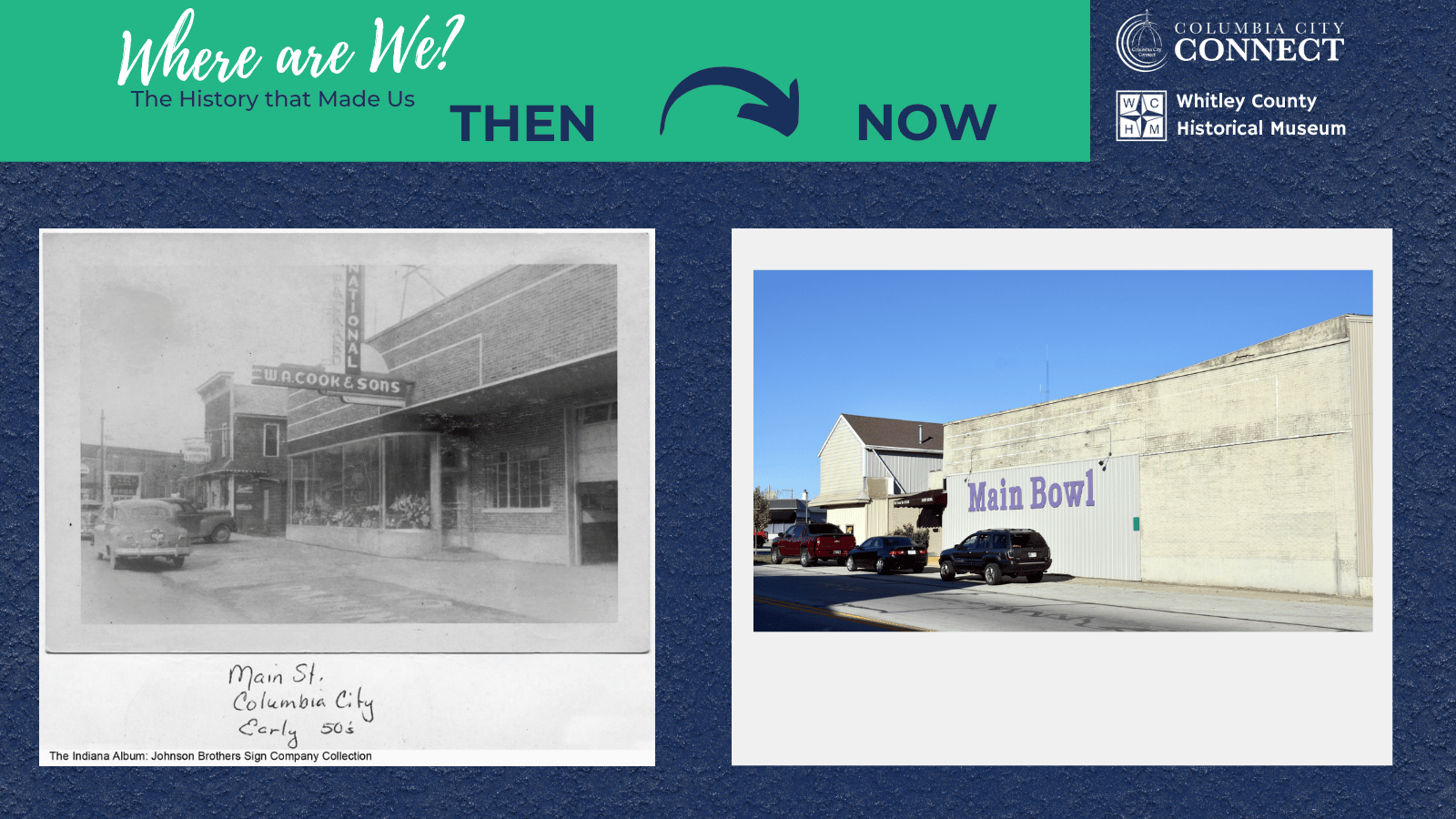
In 1946, when the Triers purchased the former Tuttle Mill site just south of the river on South Main Street and moved there, the Cooks built their bowling alley near the corner of Main and Ellsworth Streets in downtown Columbia City.
Part of the remaining property on that site that had been owned by Triers then became part of Anderson-Shroyer Tractor Sales. Anderson-Shroyer had space just north of the Cooks property and also just south of it at 307 South Main Street. Today, that portion is part of Main Bowl as well.
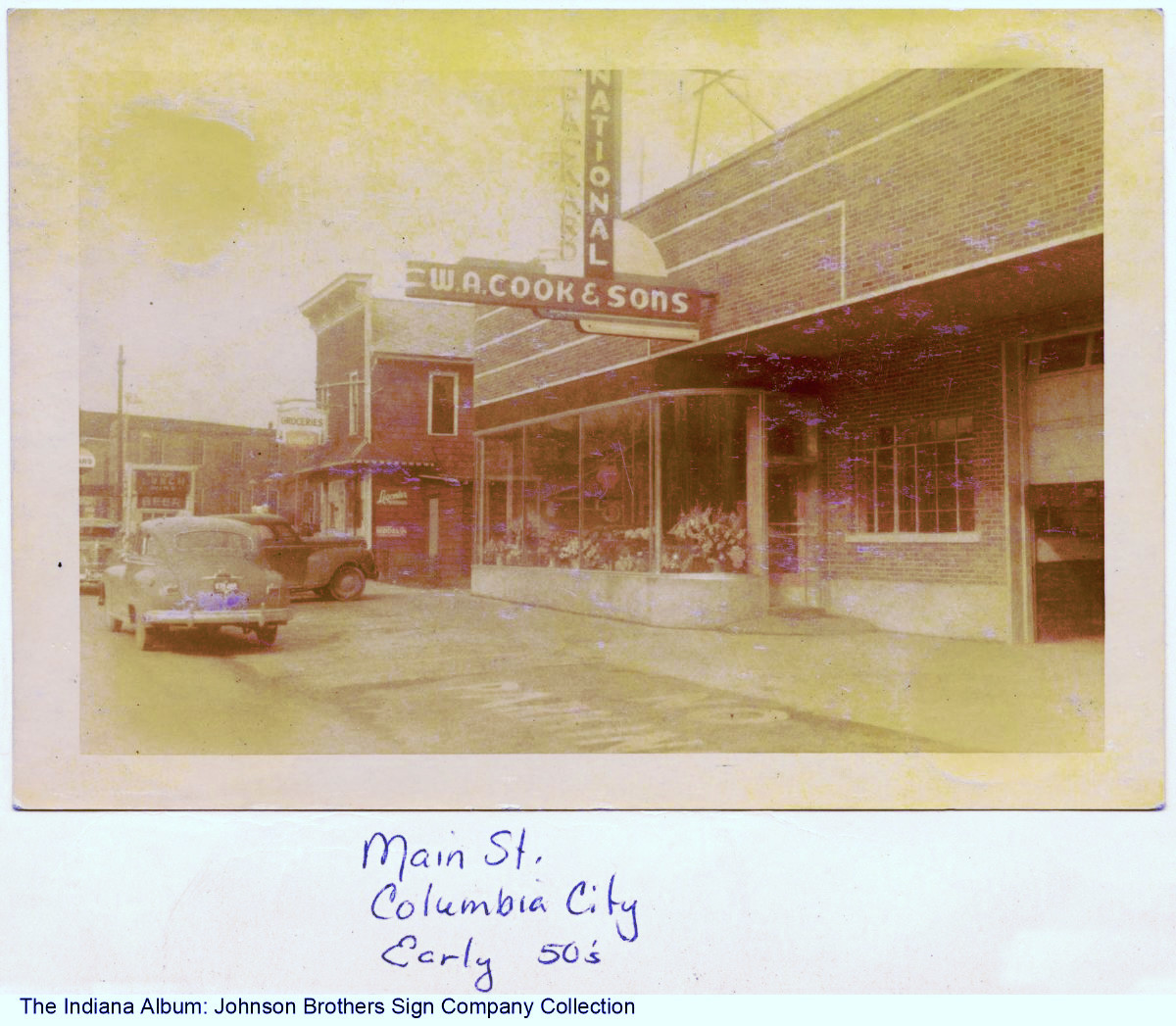
Cook’s Bowling Alley & more
Wave and Blanche Cook purchased land from the Trier Implement Company and built their bowling alley which opened in 1949. They operated the business with their son, Jack.
Jack was an excellent bowler. In 1952, when he was interviewed by WGL radio station, he shared that, to his knowledge, the first local perfect bowling score was made in the early 1930s in downtown Columbia City. According to Cook, in the early 1930s, there was a two-lane bowling alley operated by Mearle Anthes in what would later be the Estlick Insurance Agency (and now Blue Moon Bakery) at the corner of Main and Van Buren Streets. Rut Arnold rolled a perfect 300. Jack Cook, himself, bowled a perfect 300 on the first Sunday in September of 1952.
In 1956, the Cooks had the opportunity to buy additional property to expand their operation and to do some renovation. They purchased the property on the southwest corner of Main and Ellsworth Streets from Jesse and Albert Rhoads in Columbia City with plans to revamp it and add on to their bowling alley facility. At the time, there was an open space between the Corner Bar, operated at that time by Russell Pence, and the Cook’s bowling alley, so they planned to put a restaurant in that space, connecting both buildings and adding new entrances. The Cooks planned to take it over the Corner Bar at the end of Pence’s lease, noting that the most significant structural changes would not take place until 1957 when the lease expired.
The renovation planned called for adding a unified Indiana limestone front to the buildings for visual appeal. At the rear of the facility, they planned to add an extension for the installation of automatic pin setters which they hoped to have in place by the time the bowling season opened in the fall of 1956.
In February of 1957, the Cooks hosted an open house to unveil the new Ten Pin Lounge at the Cook’s Bowling Alley. The crowd was estimated to be around 3000 people. Bob Irons of Churubusco served as emcee. The event also featured bowling demonstrations by the Falstaff Bowling Team. Additionally, dozens of door prizes were awarded — including rounds of bowling and T-bone steak dinners in the new Ten Pin Lounge. At that time, the Ten Pin Lounge and Restaurant was leased and operated by Mr. and Mrs. Jack Osman of Osmanor Farm, a popular restaurant on the west edge of Mentone, Indiana. Previous to that, the couple operated the Chicken-in-the-Rough restaurant in Plymouth, Indiana.
In September of 1959, Cook’s Ten Pin Restaurant announced the opening of the Red Crown Dining Room adjacent to their Ten Pin Restaurant and Cook Lanes Bowling establishment. The Red Crown Room could seat up to 125 people for private parties including weddings, anniversaries, birthdays and more. The room offered a quiet space for events.
To the delight of patrons, they added air conditioning, which they were promoting heavily in their advertising in 1960.
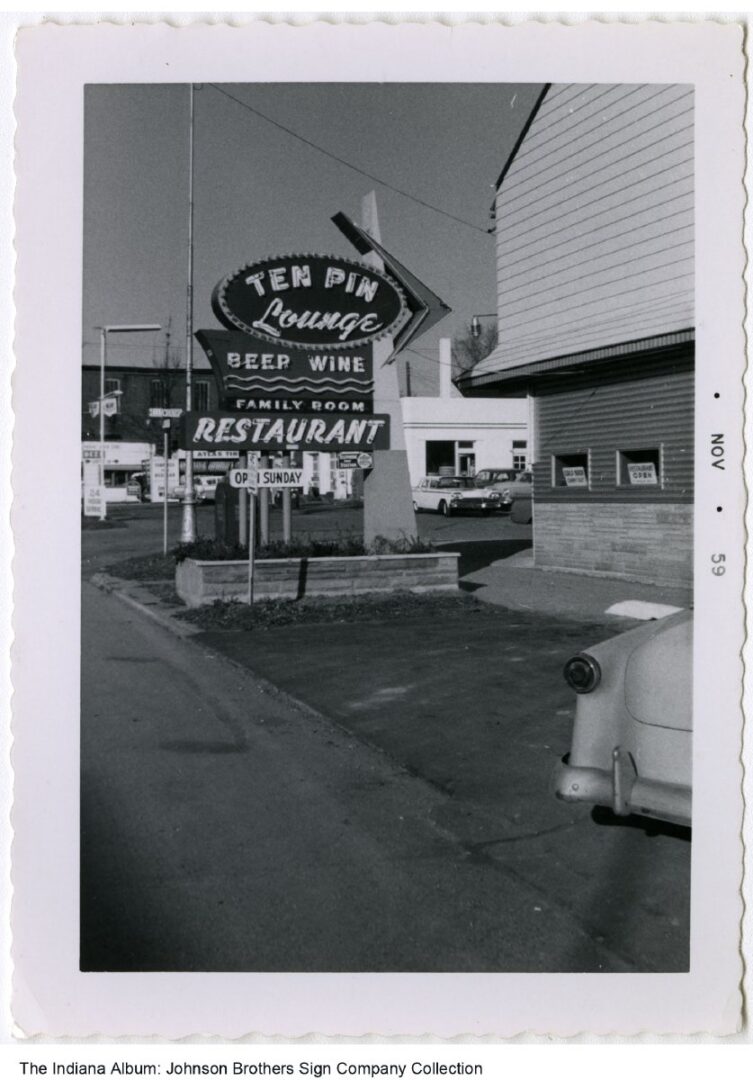
In 1961, the Cooks announced that the Ten Pin Restaurant would be leased to Cecil Ward, a corner Columbia City resident who was, at that time, living in Huntington. They planned to continue running the bowling alley.
Eventually, the Cook’s also took over operations for the bar, marketing it as Cook’s Ten Pin.
Today, it’s known as @Main Bowl and The Eleventh Frame.
Thank you to Jennifer Romano, @Whitley County Historian – Indiana for her outstanding research and writing of the article and the Whitley County Historical Museum for sharing photos from its collection.
𝑾𝒉𝒆𝒓𝒆 𝒂𝒓𝒆 𝑾𝒆: 𝑨𝒓𝒄𝒉𝒊𝒕𝒆𝒄𝒕𝒖𝒓𝒂𝒍 𝑯𝒊𝒔𝒕𝒐𝒓𝒚
The curved façade is tucked into the middle of what is now Main Bowl and 11th Frame Bar & Grill at 303 S. Main Street.
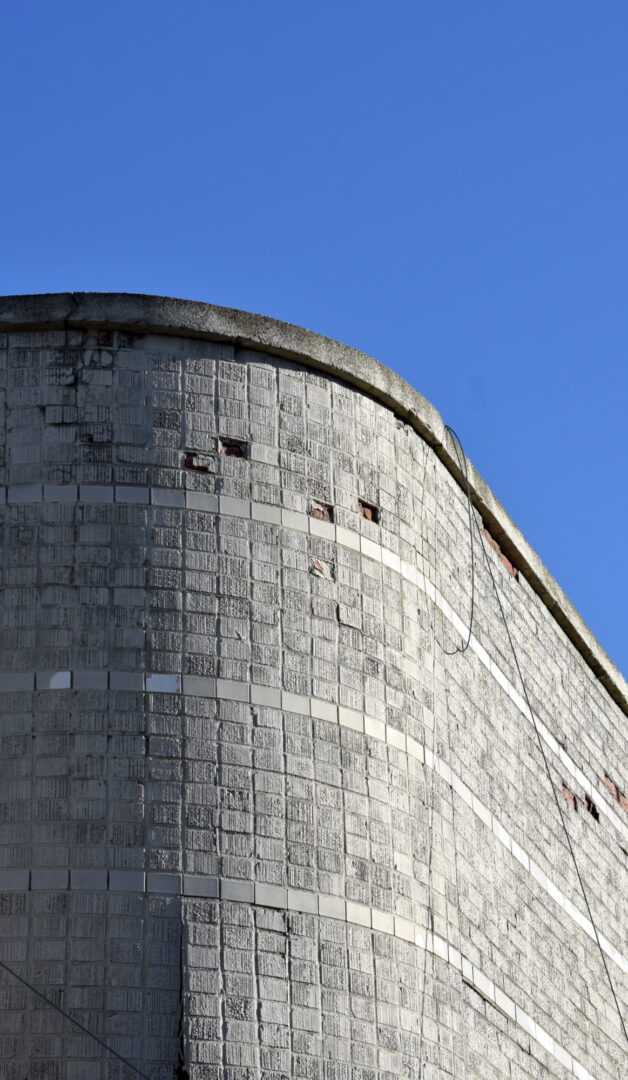
Originally built as a car and farm implement dealership in the 1930s or 40s, the building’s architectural style was Streamline Moderne, a successor to Art Deco and unique in Columbia City.
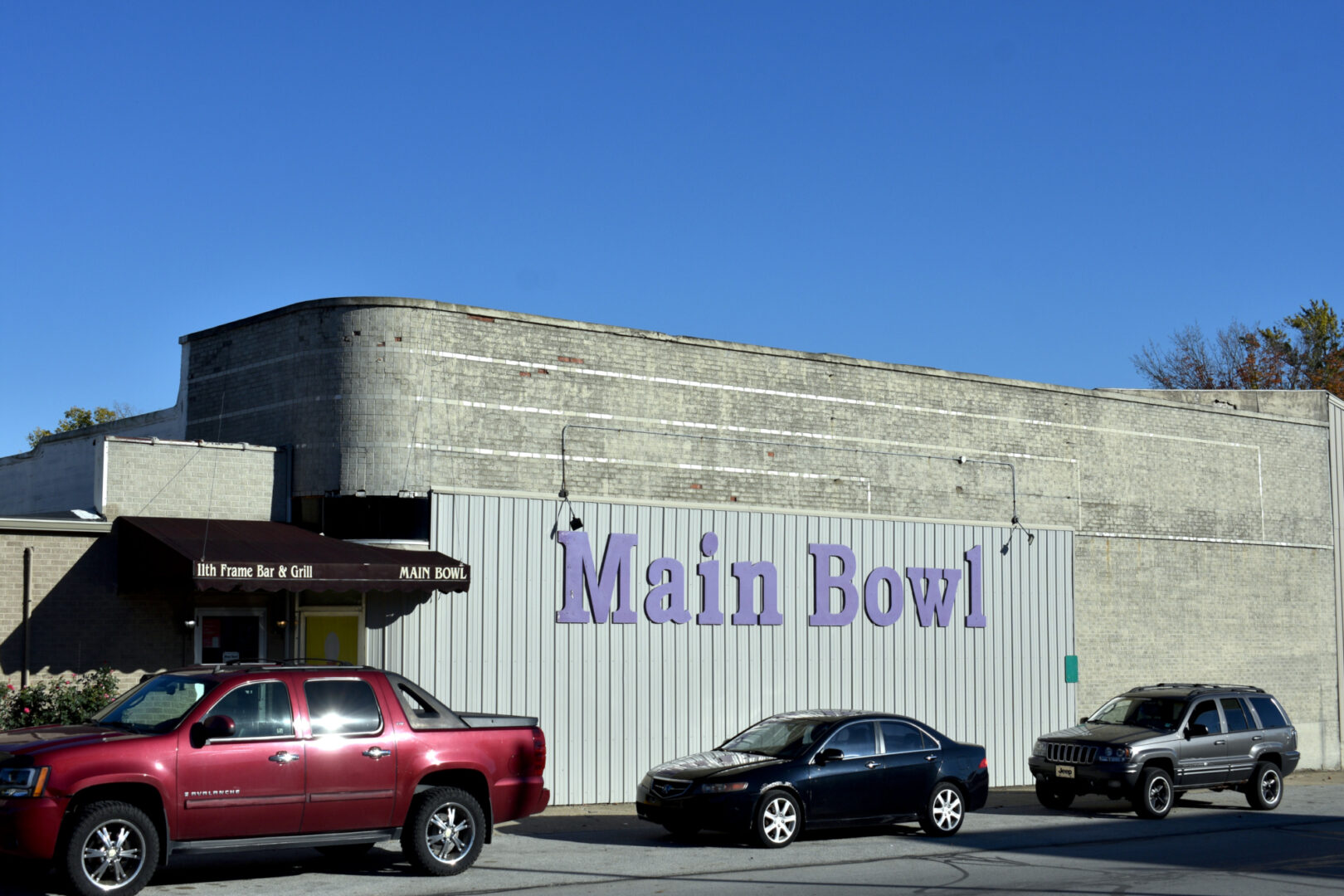
Streamline Moderne was exemplified by its use of curved corners, strong horizontal lines, minimal ornamentation, the use of glass block, stainless steel or chrome, or glazed brick, and often had stylized nautical elements like railings, bridges, and portholes. Most of these elements were originally found on this building.
Even having been converted to a bowling alley in the early 1950s and then combined with the much older tavern to the north, the building’s original purpose and design can still be seen if one looks up.
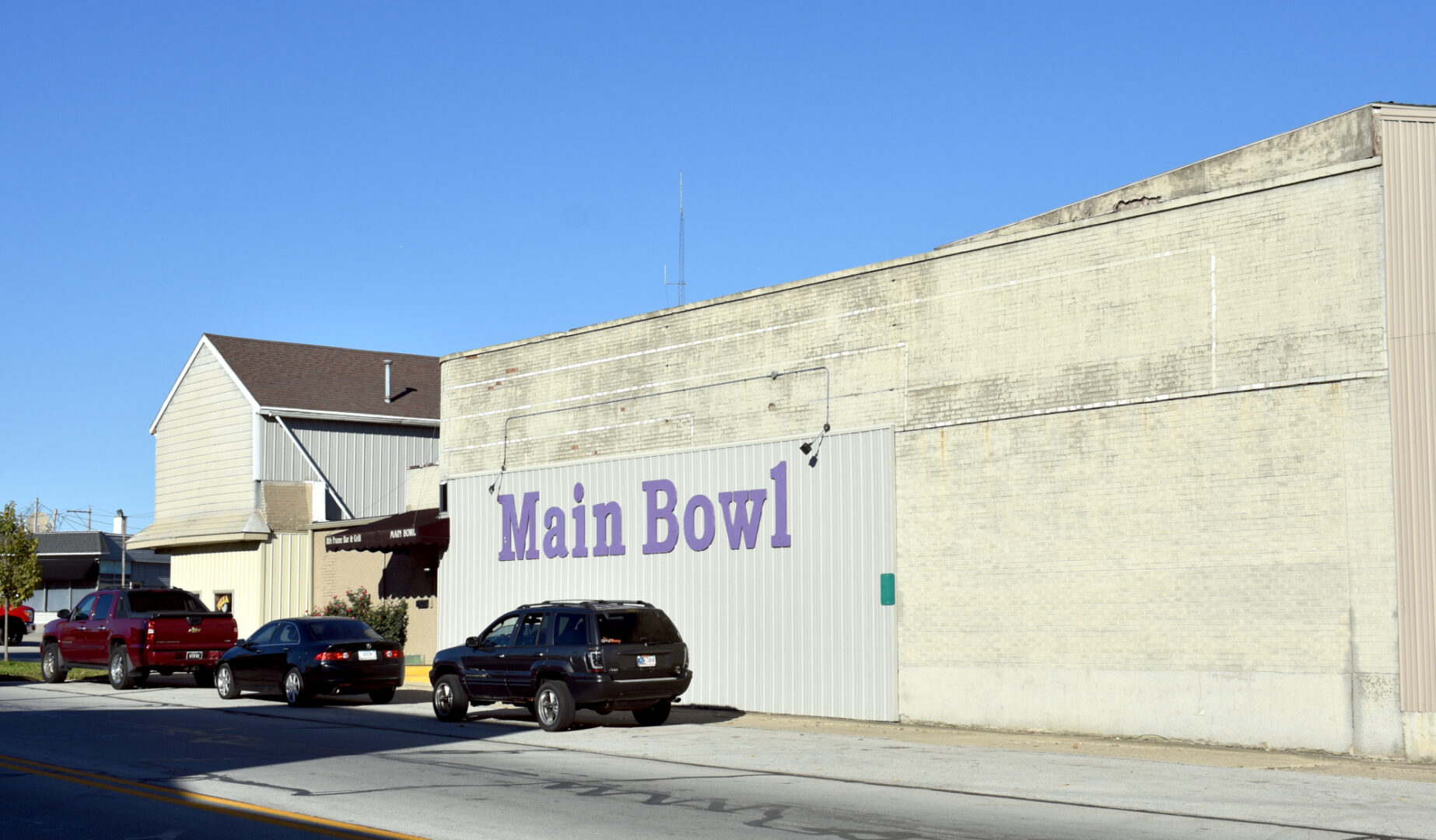
Thank you to Nathan Bilger for providing the recent photos and valuable insights into the architectural history.