“If only the Courthouse square could speak… oh the stories it would tell!”
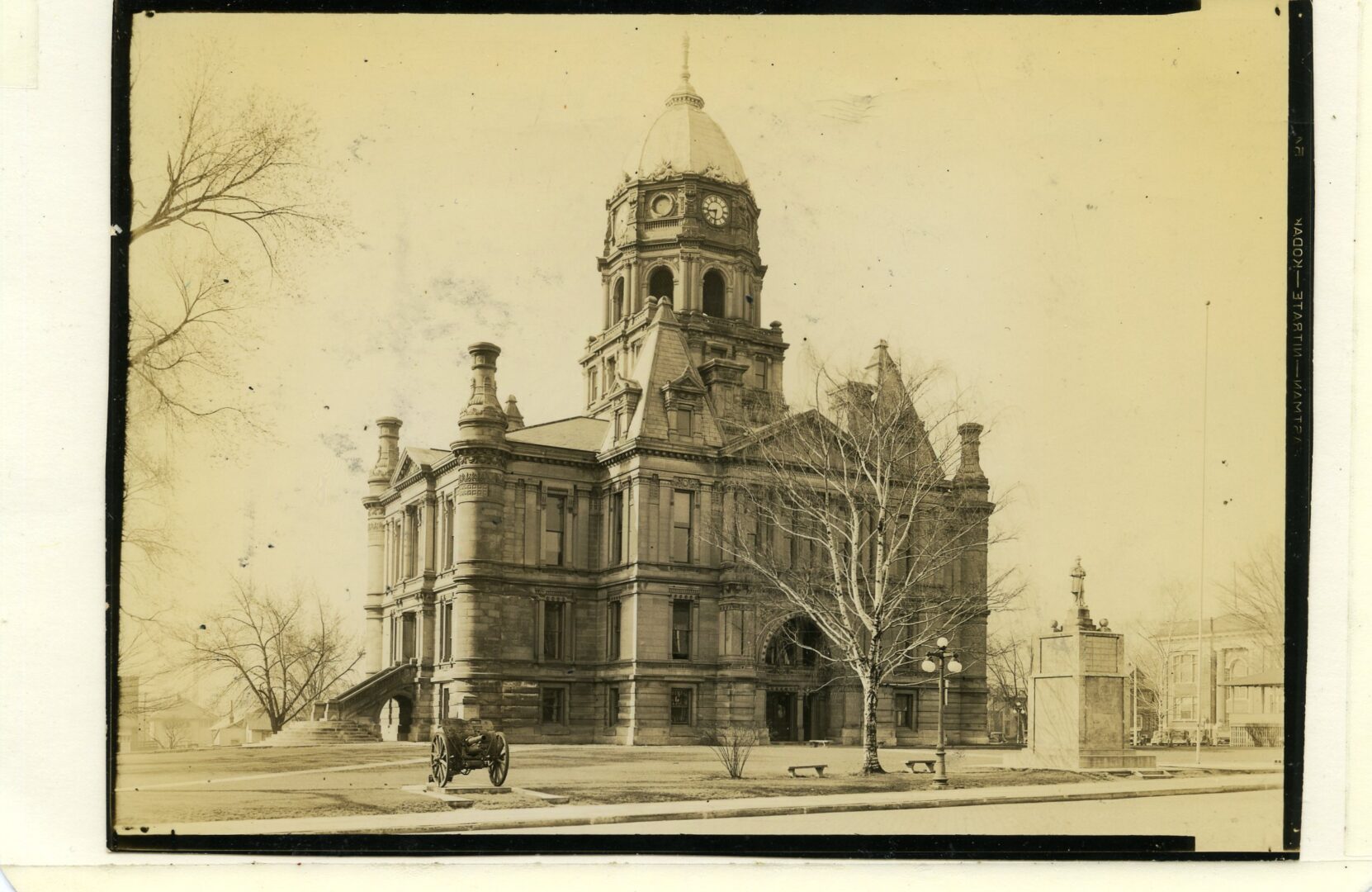
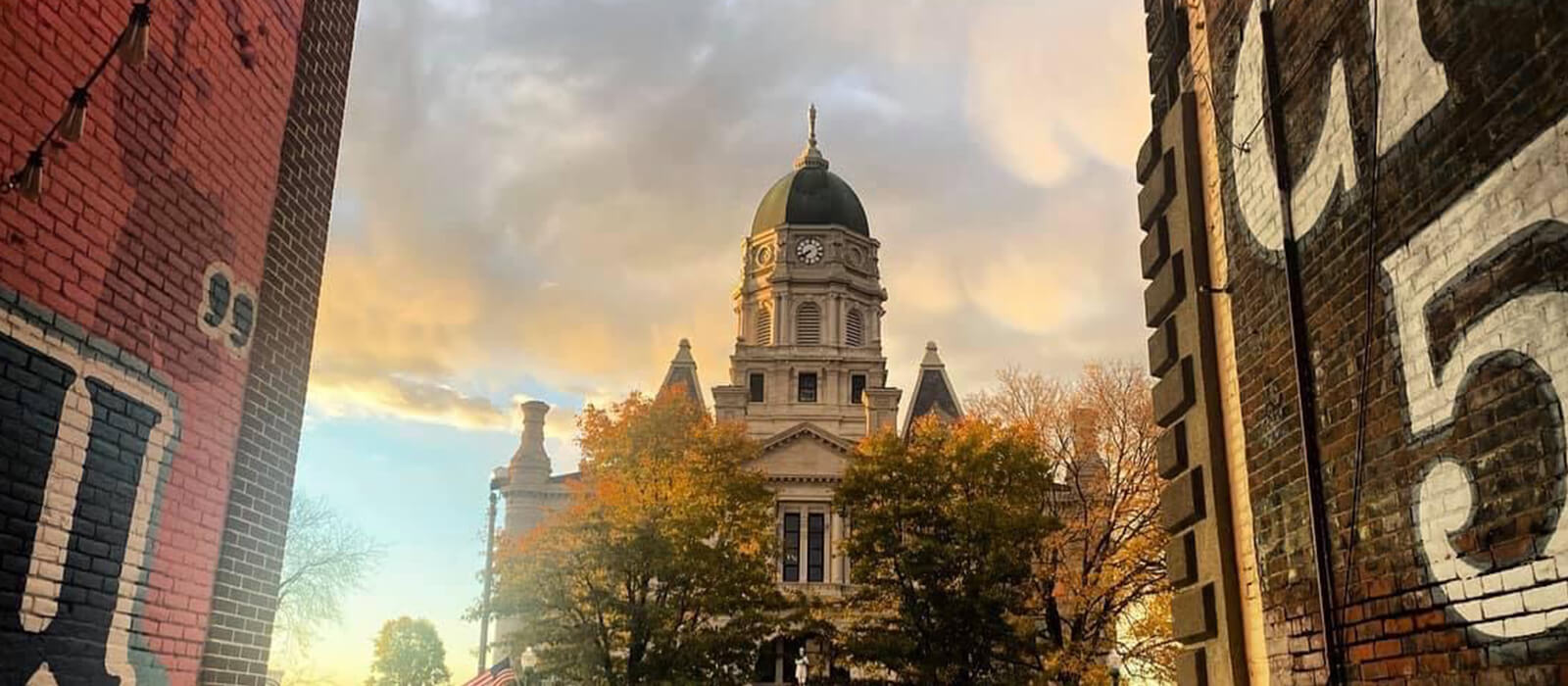
Thankfully, the Courthouse square does not need appendages to tell the stories of those who have come before us. The beautiful Whitley County Courthouse is gently framed by speckles of history that serve as monuments for those who have served to protect not only Whitley County, but our nation as a whole.
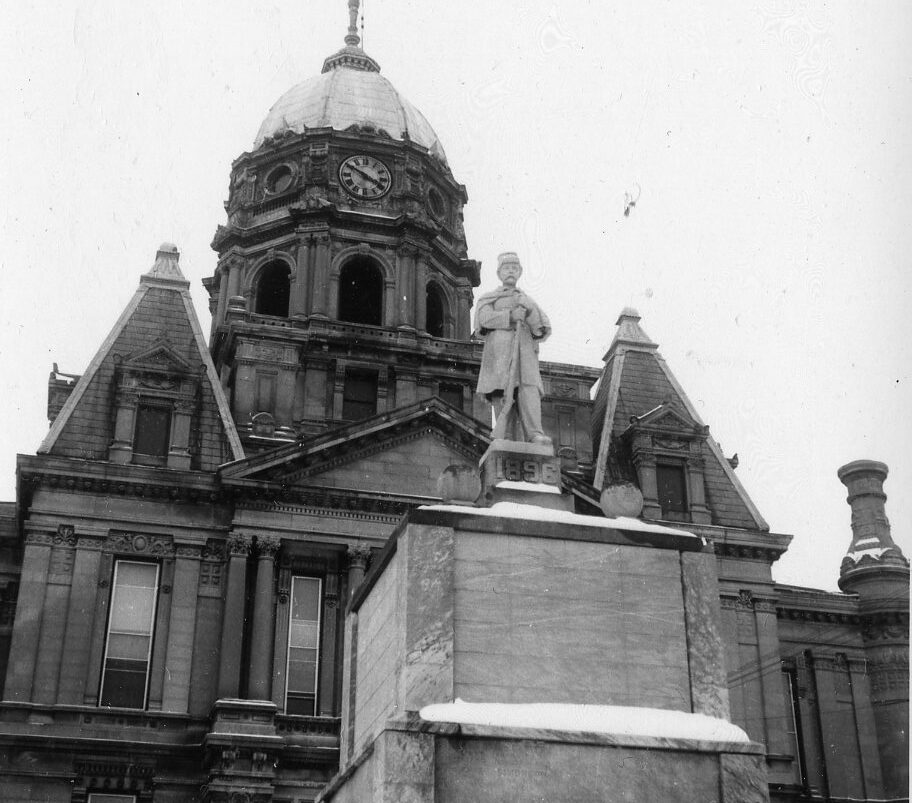
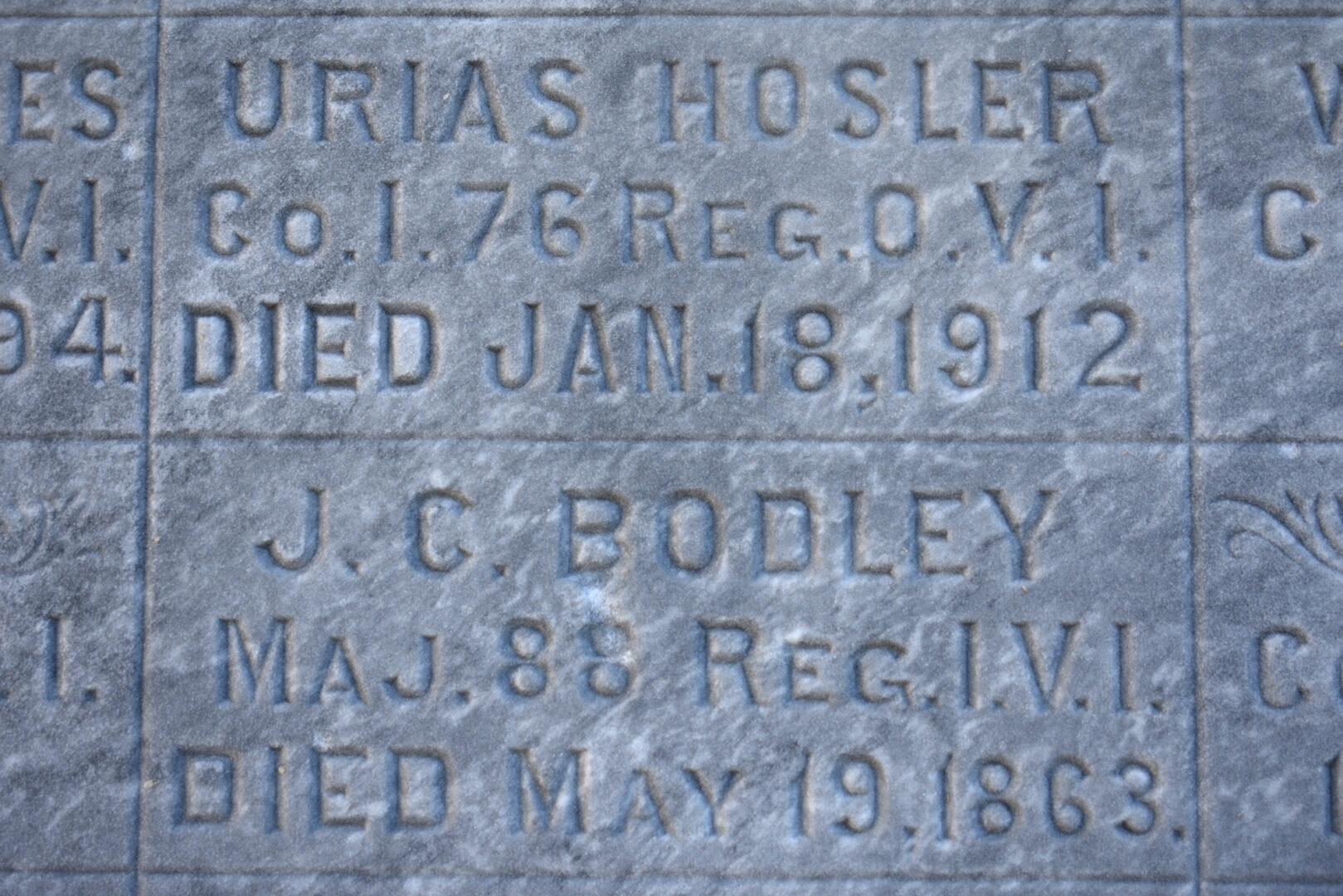
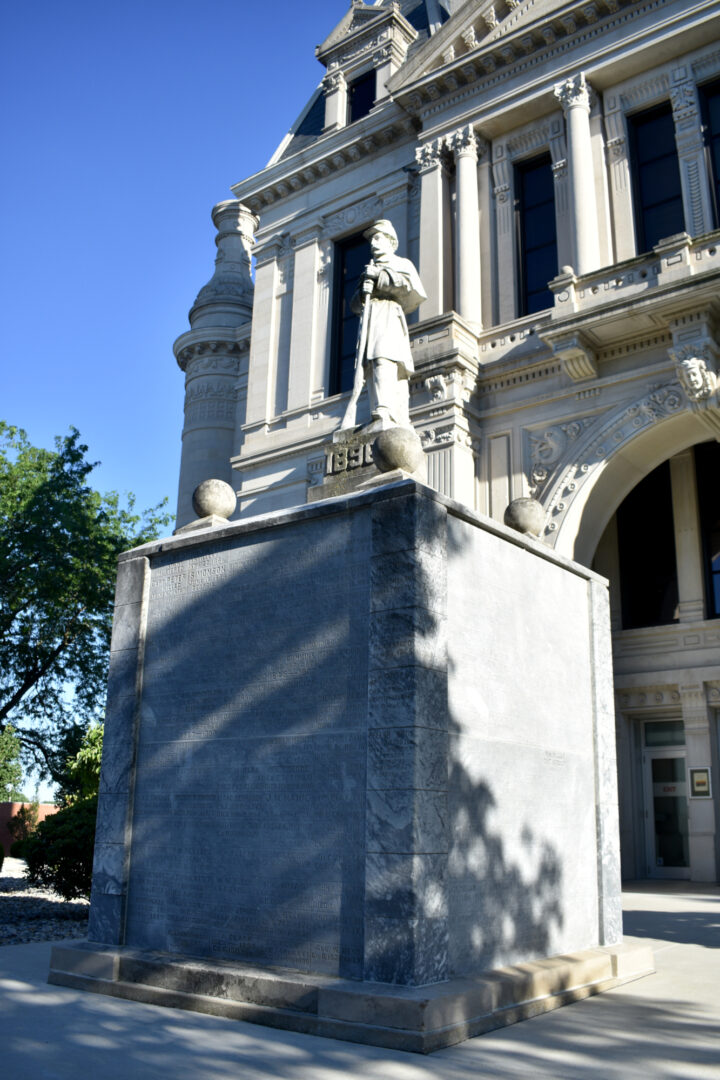
The first of these monuments now stands front and center to the entrance of the Courthouse. Thirty years after the close of the Civil War, a monument honoring local soldiers was planned. This monument was set to be cut from Italian marble in Italy, and by September 1896, the GAR committee had contracted with C. V. Inks for the delivery of the monument. Weighing in at nearly 7,000 pounds, the monument’s unloading and placement was superintended by Louis Harter. Several months later, on Memorial Day 1897, the marker was officially unveiled by Mrs. J. R. Harrison and Miss Jennie Collins. The cost of the statue was $375 and the funds were collected via subscription, with each war veteran reserving a space for their name to be engraved at his own cost. In the mid-1980s, repairs were conducted on the structural base of the monument. It was at this time that the monument itself was moved to its final resting place in which we enjoy today.
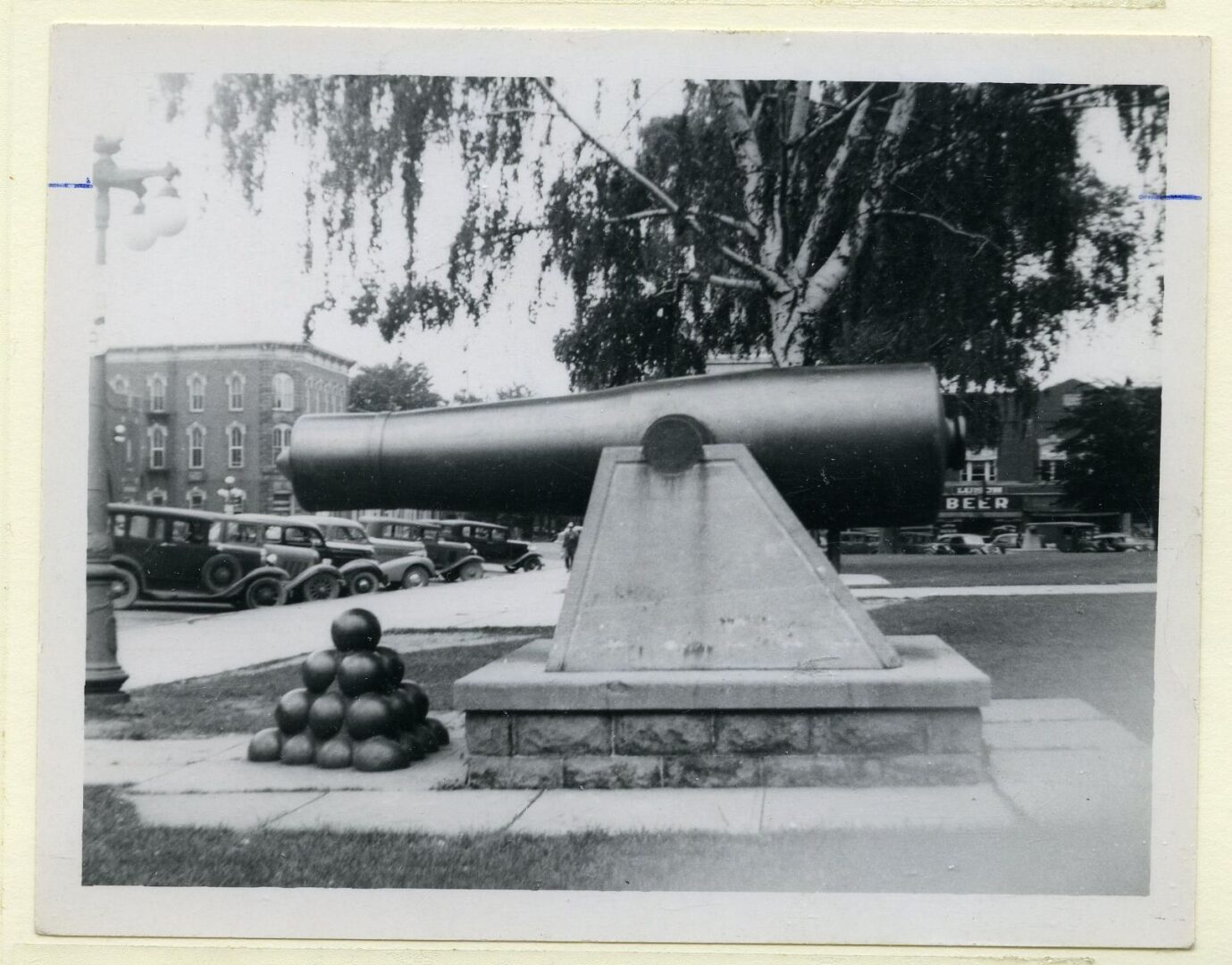
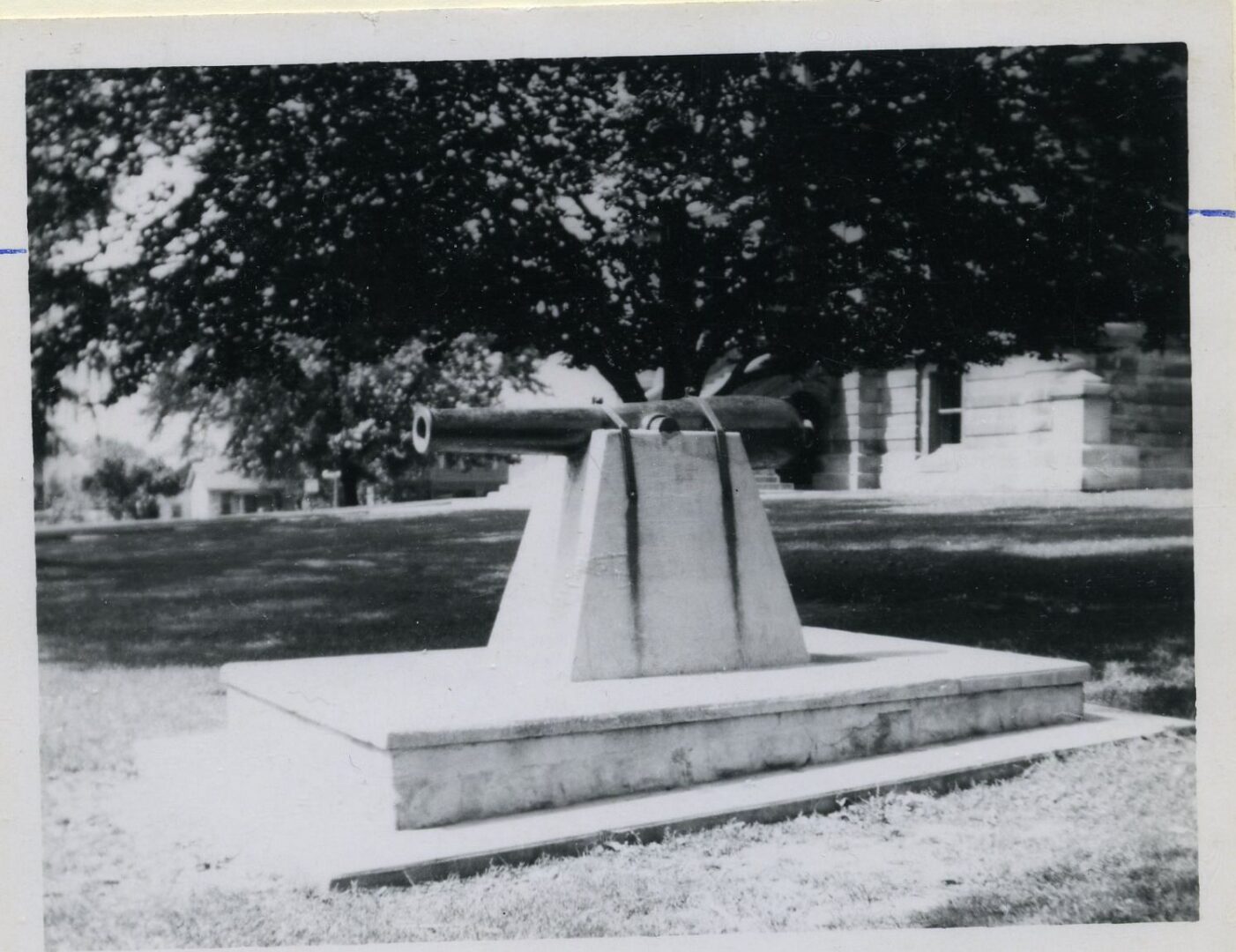
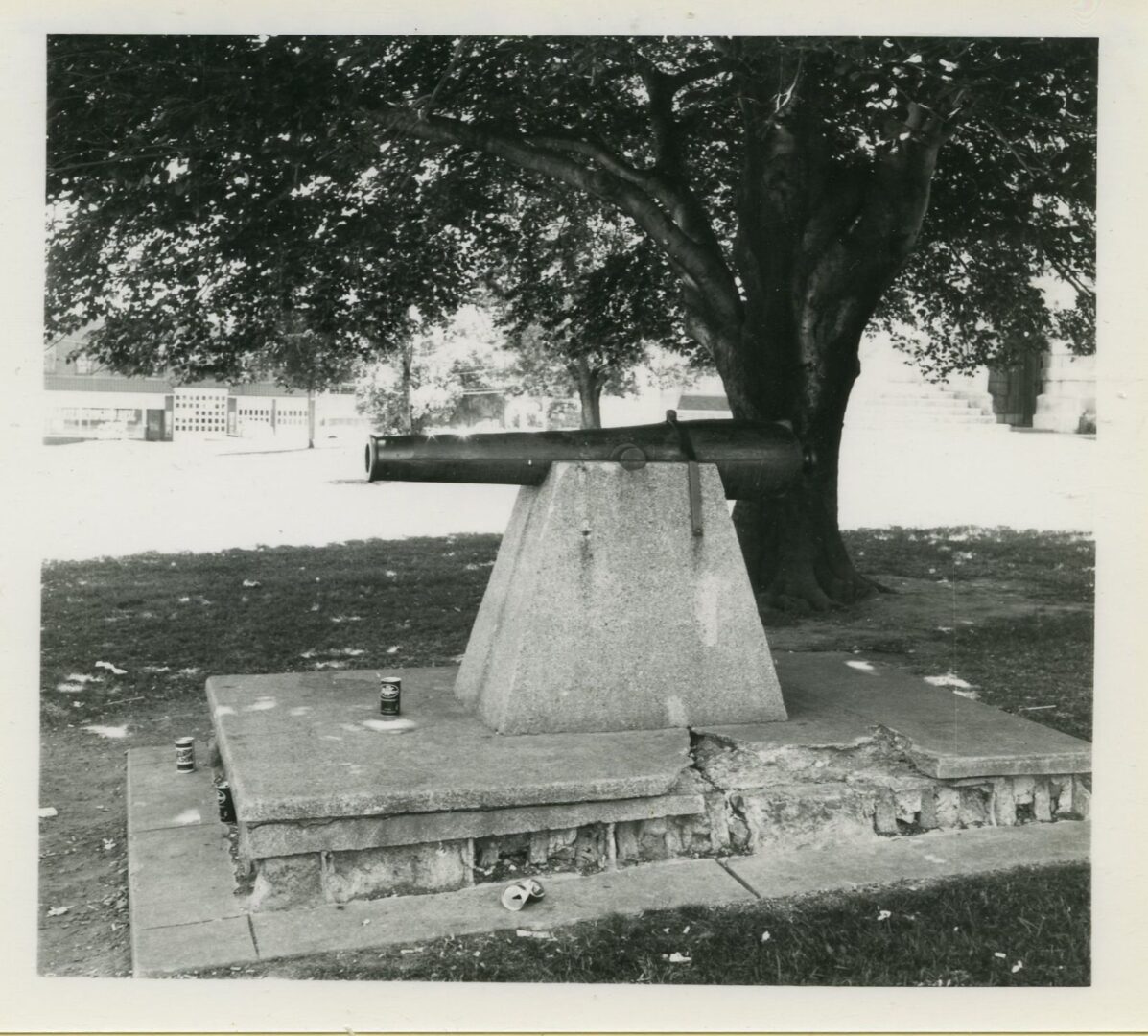
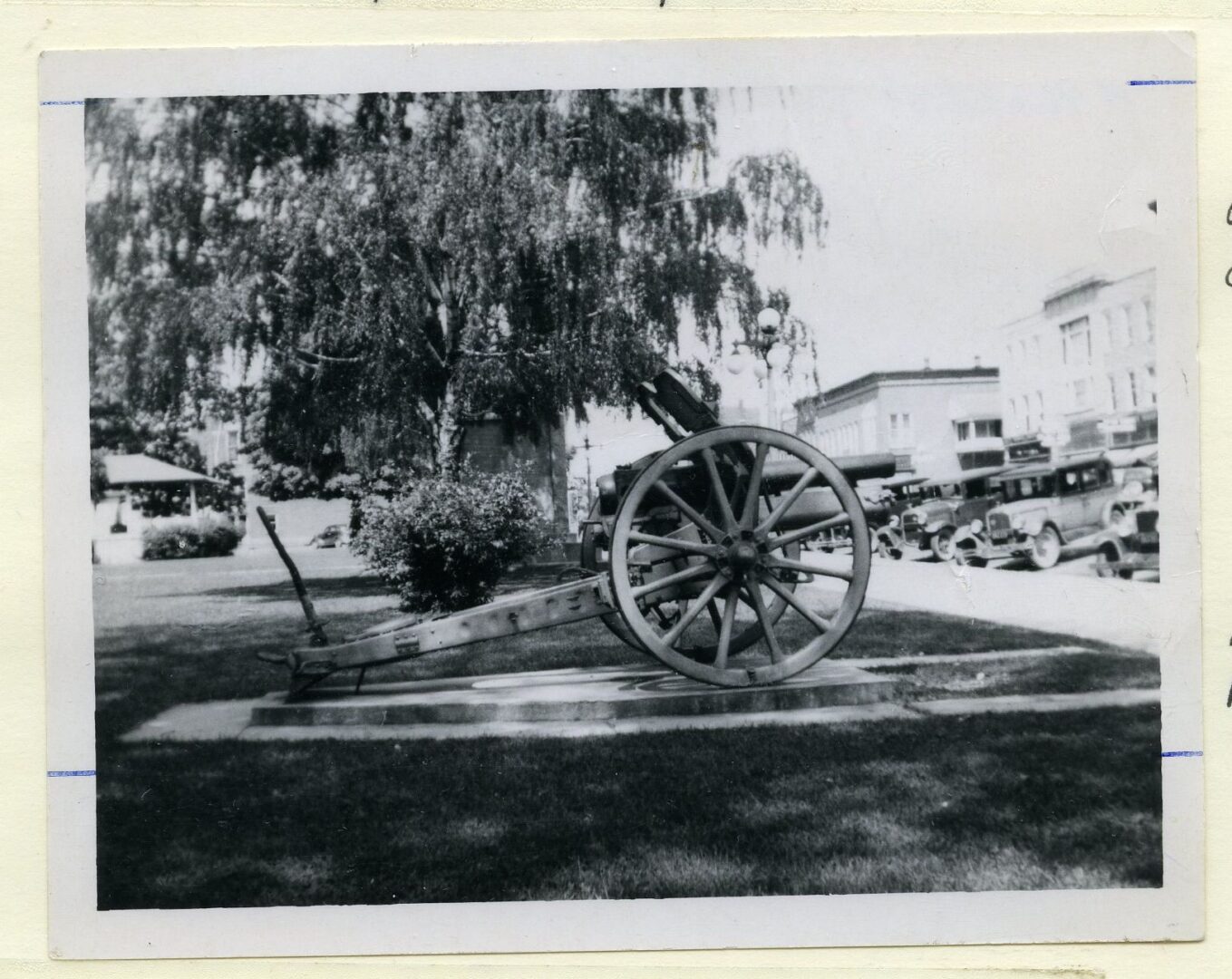
On the north side of the Courthouse once stood the Spanish-American War cannon with its neatly stacked cannon balls. The cannon was sent to Columbia City from the Brooklyn Navy Yard around the year 1900. A World War I cannon also once stood on the courthouse lawn. Originally placed there by the local American Legion, this cannon served as a replica of the cannon used in France. With all of that said, both of these cannons were dismantled and melted down for the metal drive during World War II.
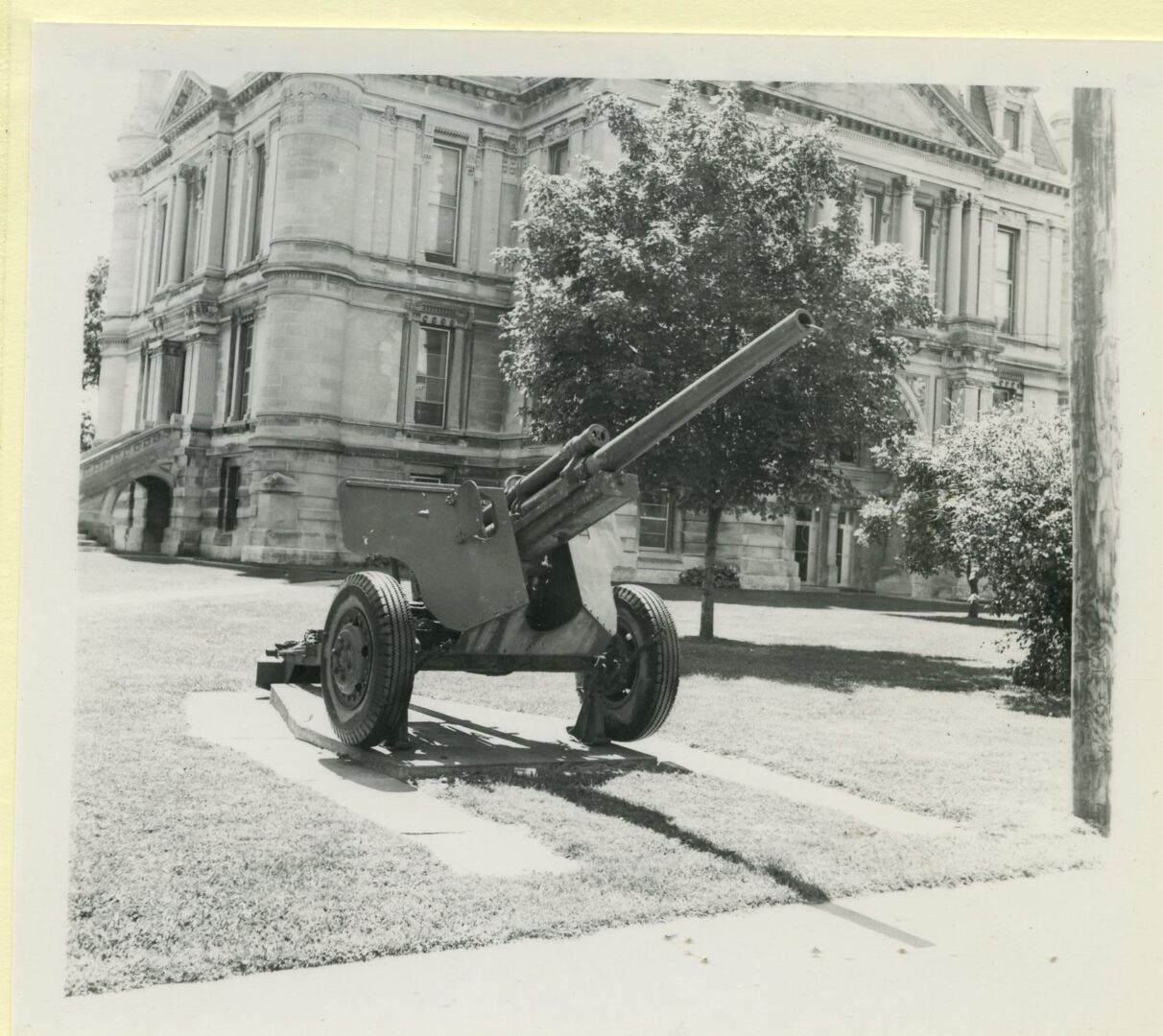
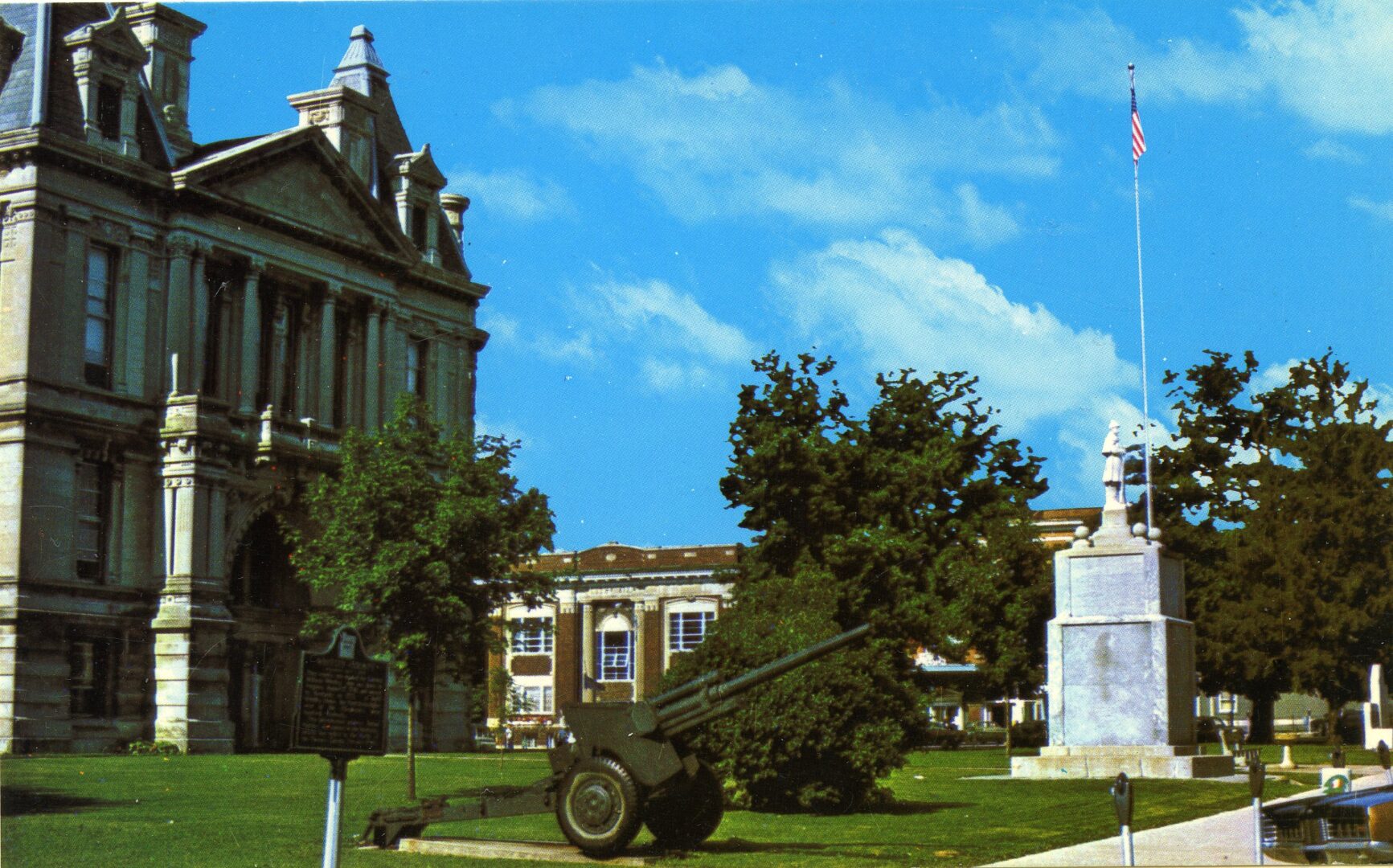
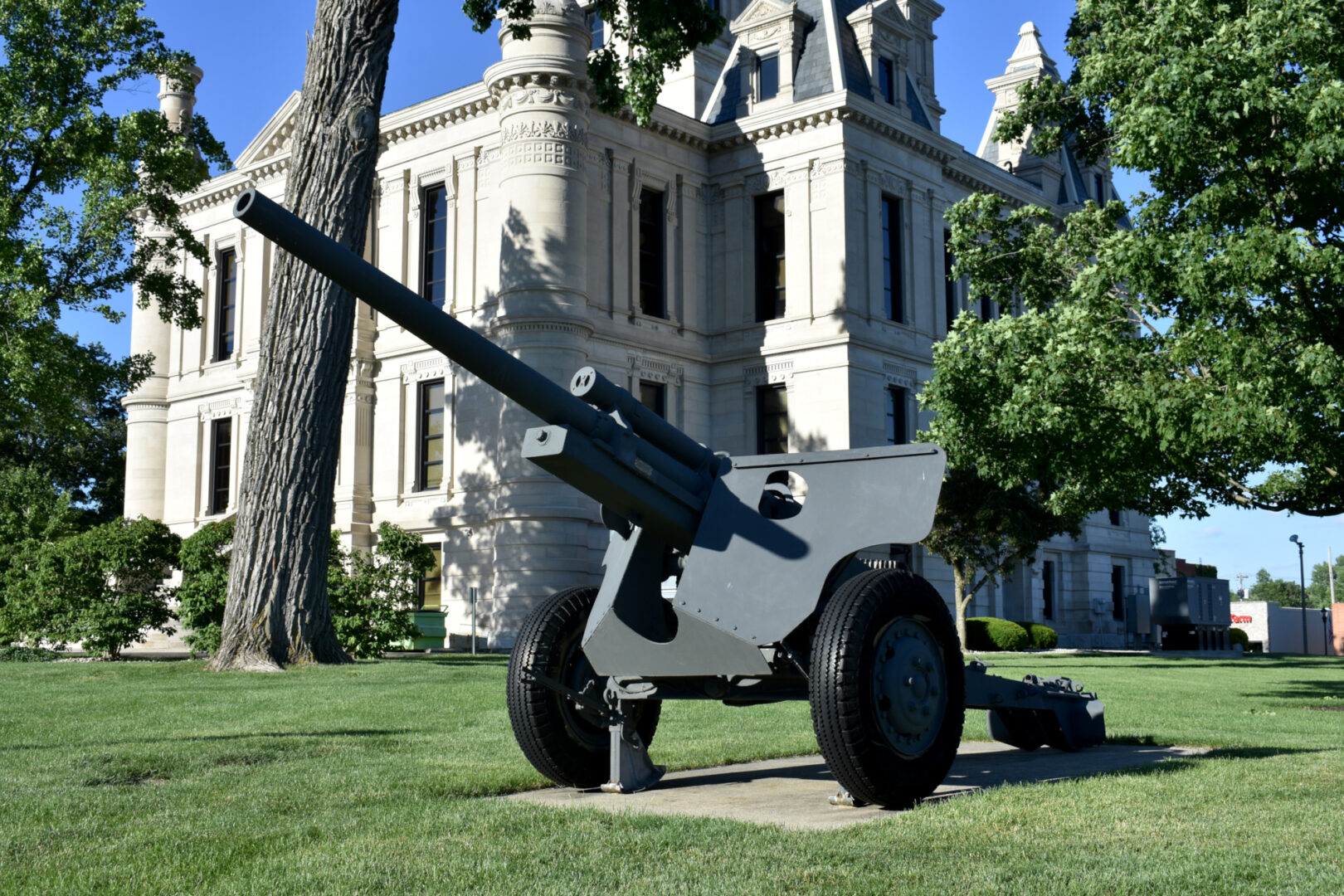
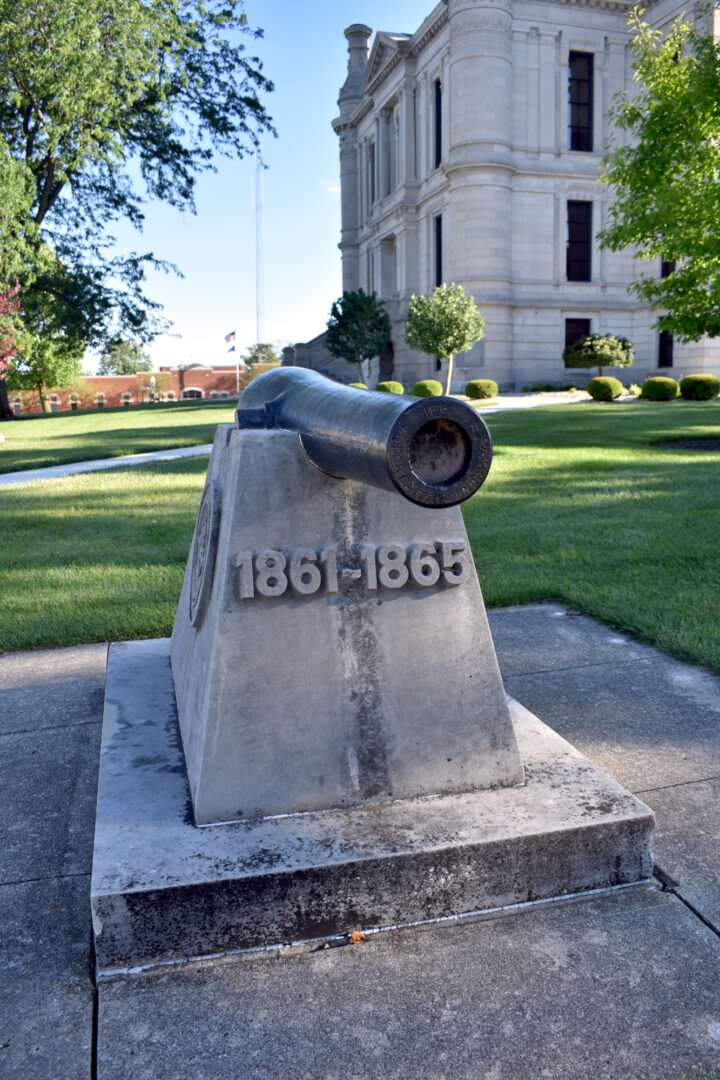
The World War II cannon now stands in the place where the World War I cannon once stood. Our local American Legion acquired and placed this cannon on the Courthouse Square. One may notice that each of the cannons placed on the Courthouse lawn aim away from the Courthouse, these memorials act as a metaphor for the men they represent by standing guard and protecting the heart of Whitley County.
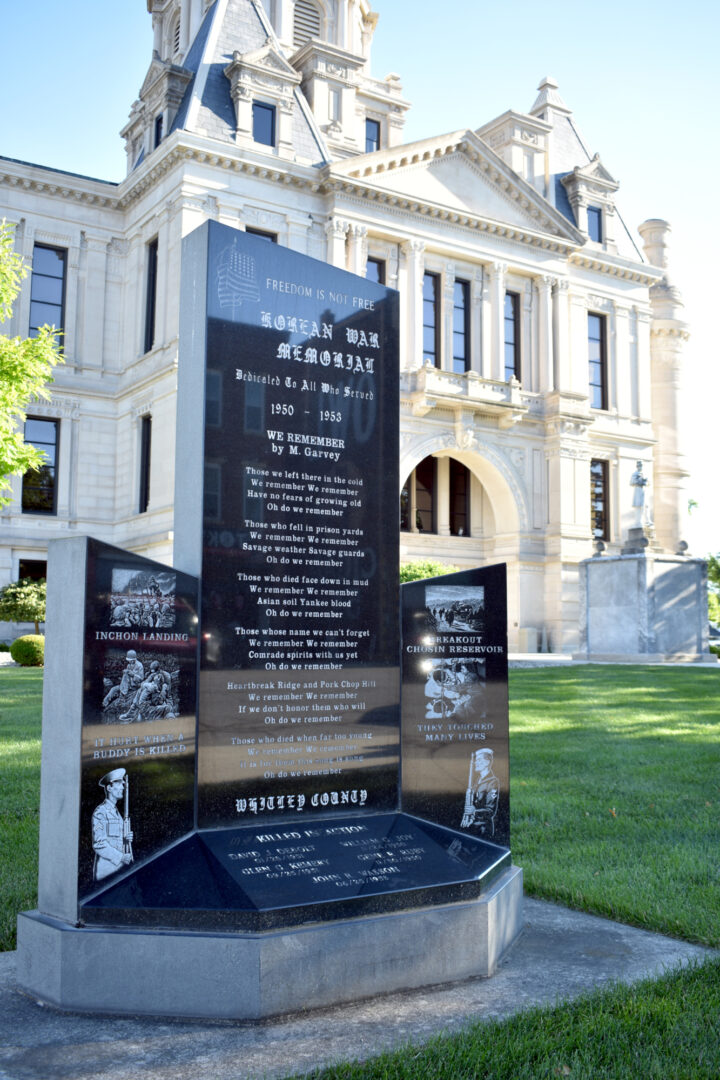
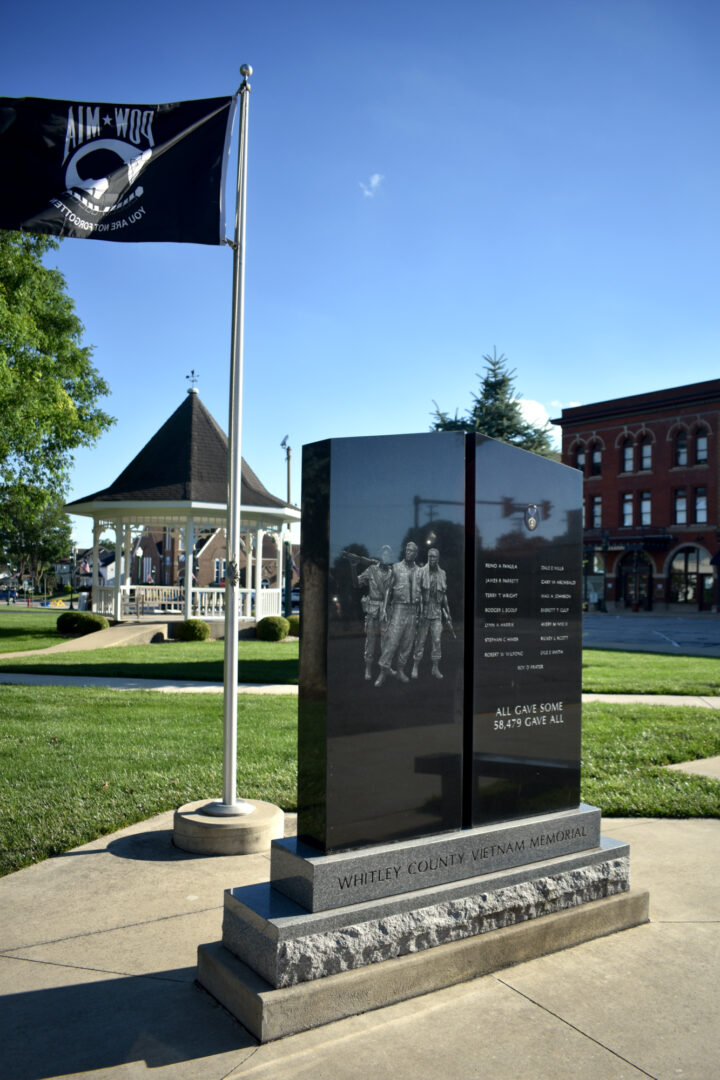
The remainder of the monuments on the Courthouse lawn rest along Van Buren Street. Each of these monuments serve as remembrance for all who served in the following wars: Civil War, World War I and II, the Korean War, and Vietnam. Almost all of these monuments were constructed and dedicated within recent years. On Memorial Day 2002, the Korean War monument was unveiled by Mrs. Gladys Ruby, mother of Gene R. Ruby, one of the five men killed in action. The Vietnam War monument was officially dedicated on Veterans’ Day 2023.
And so begins summer in Columbia City, the trees are green, the days are warm, and the town is bustling. Next time you stop down town, feel free to take a walk around the square and visit the site of each memorial, remembering those who served in each of the nation’s wars, and those who gave the ultimate sacrifice – their lives. You can even gander a couple of blocks north to visit the Whitley County Historical Museum and see are latest military exhibit.
Thank you to Hannah Varga for her outstanding research and writing of the article and the Whitley County Historical Museum for sharing photos from its collection.
𝑾𝒉𝒆𝒓𝒆 𝒂𝒓𝒆 𝑾𝒆: 𝑨𝒓𝒄𝒉𝒊𝒕𝒆𝒄𝒕𝒖𝒓𝒂𝒍 𝑯𝒊𝒔𝒕𝒐𝒓𝒚
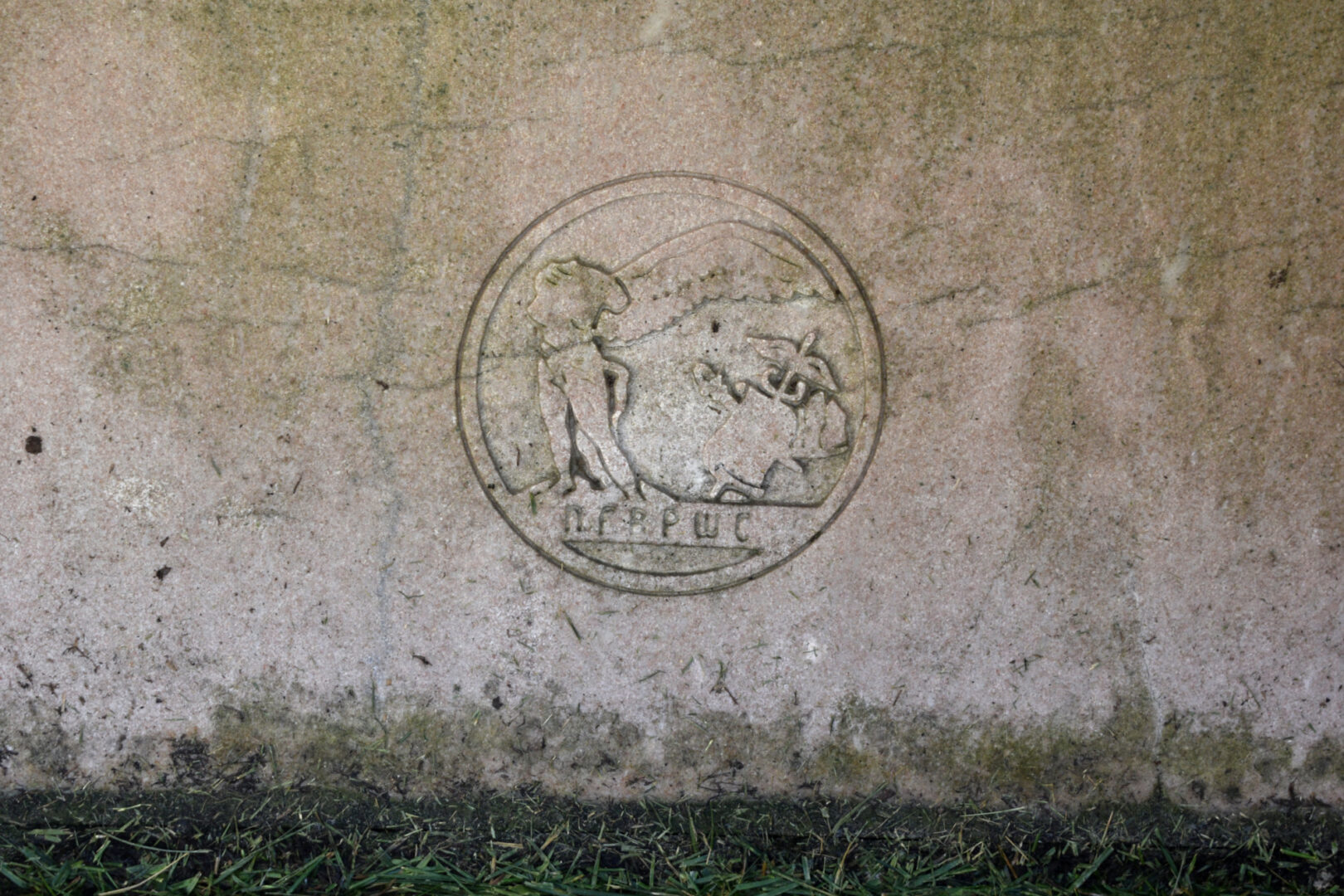
This seal was discretely placed on a prominent structure downtown. Where is it?
Here’s a second hint for this one. These letters form part of a selfless tribute.
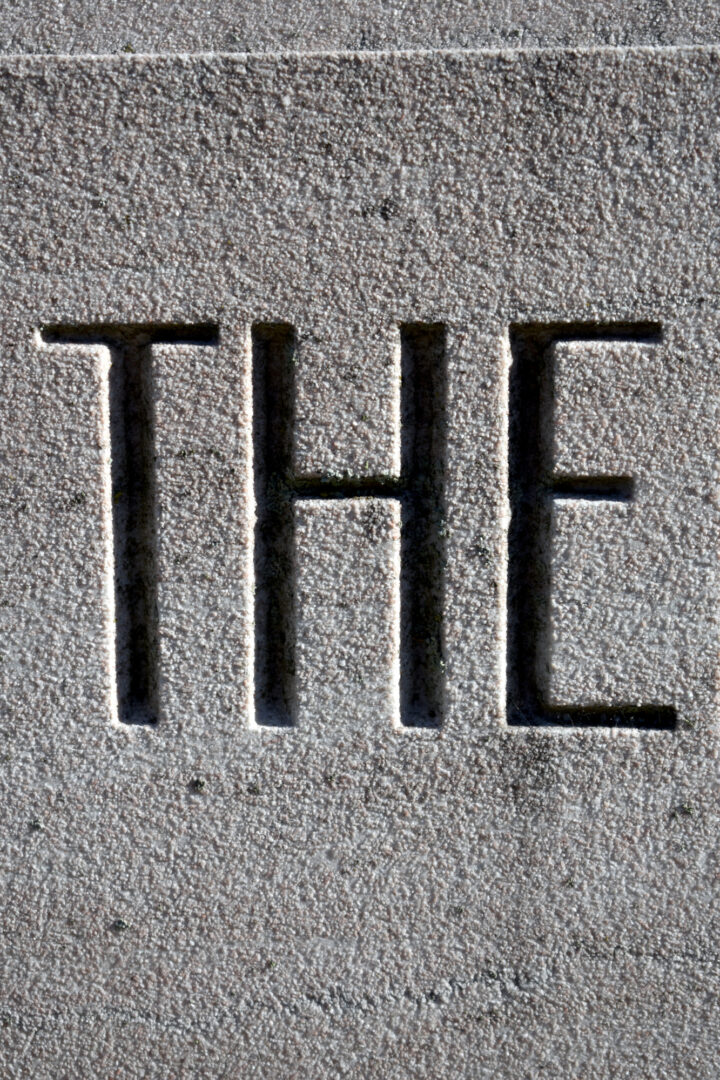
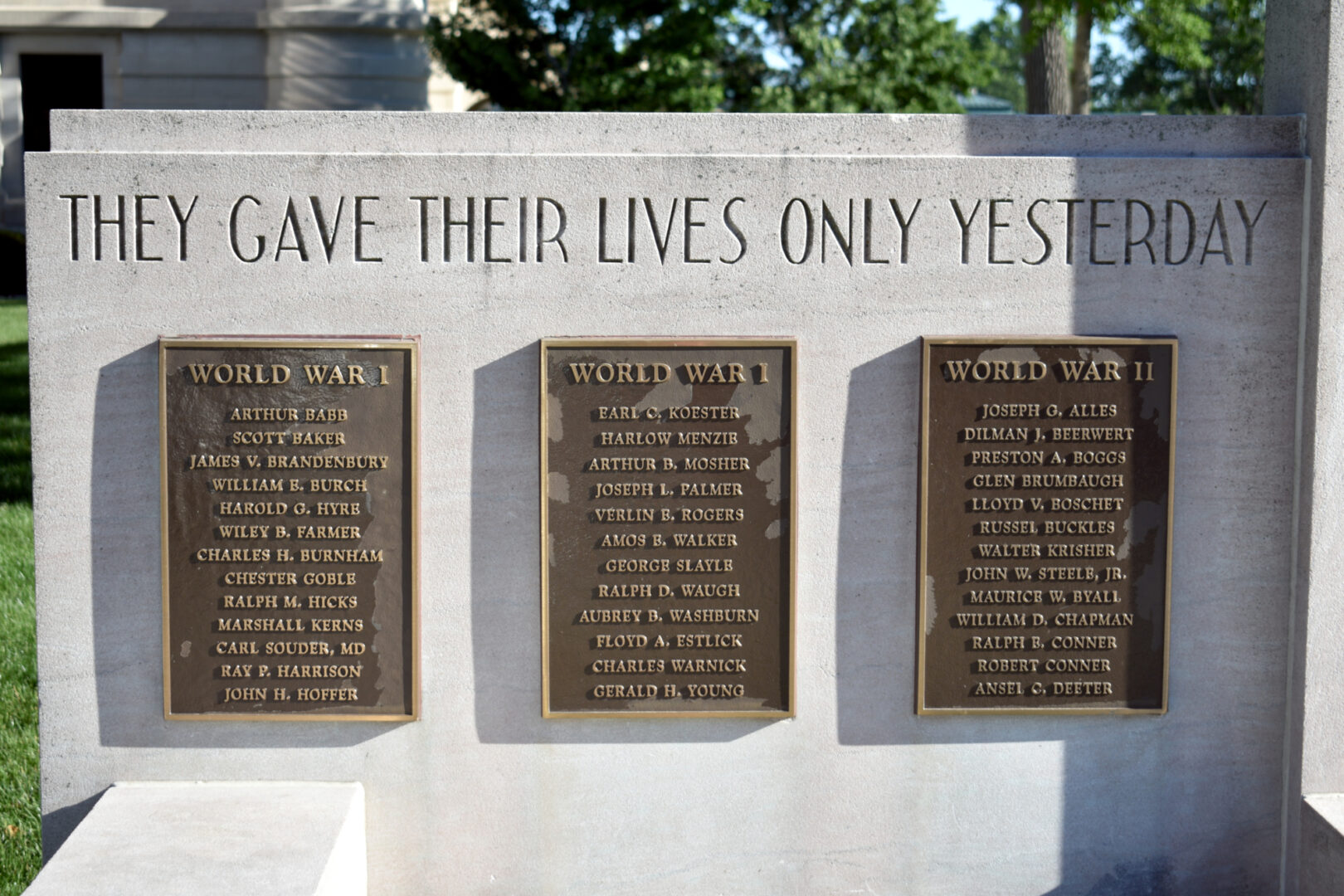
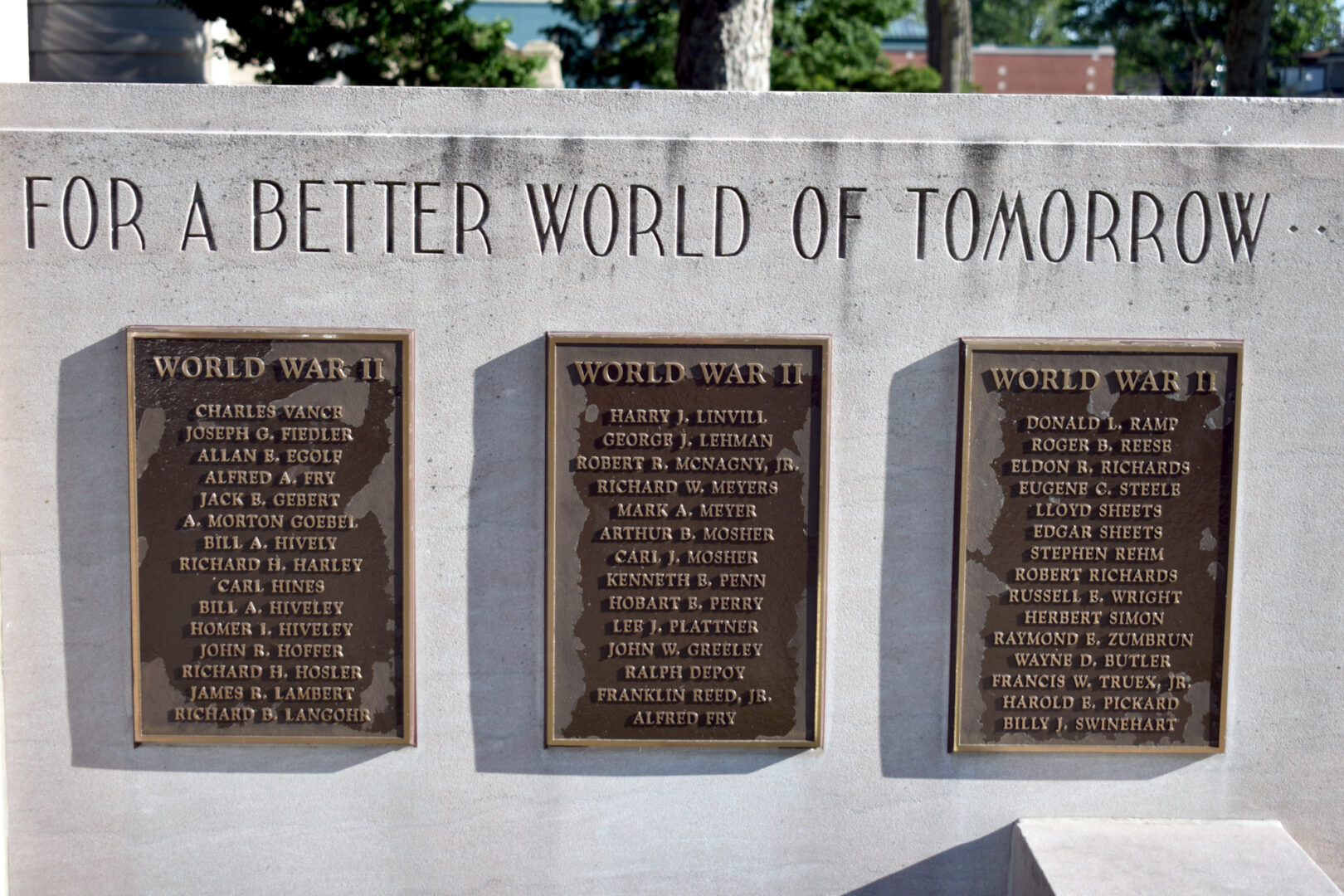
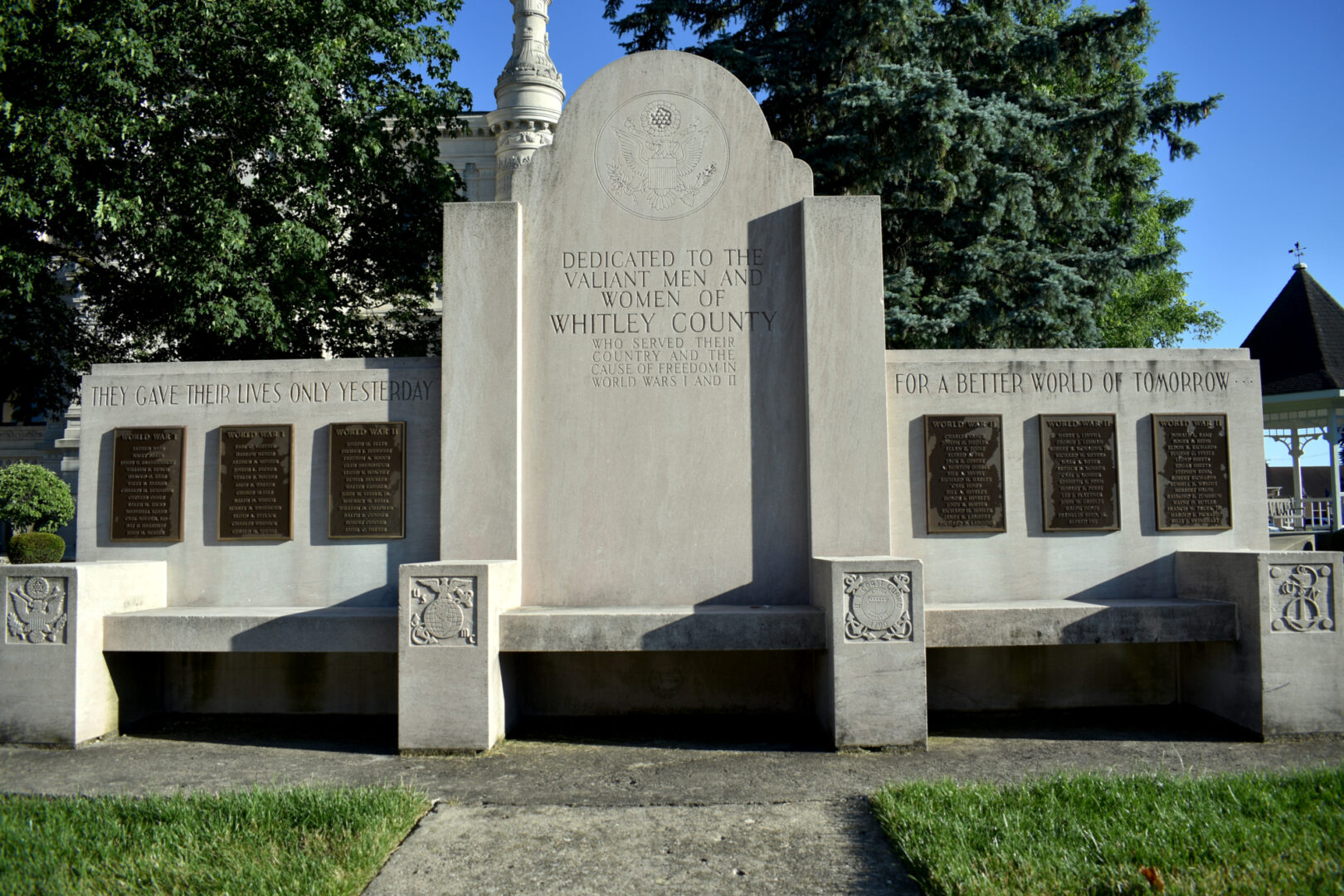
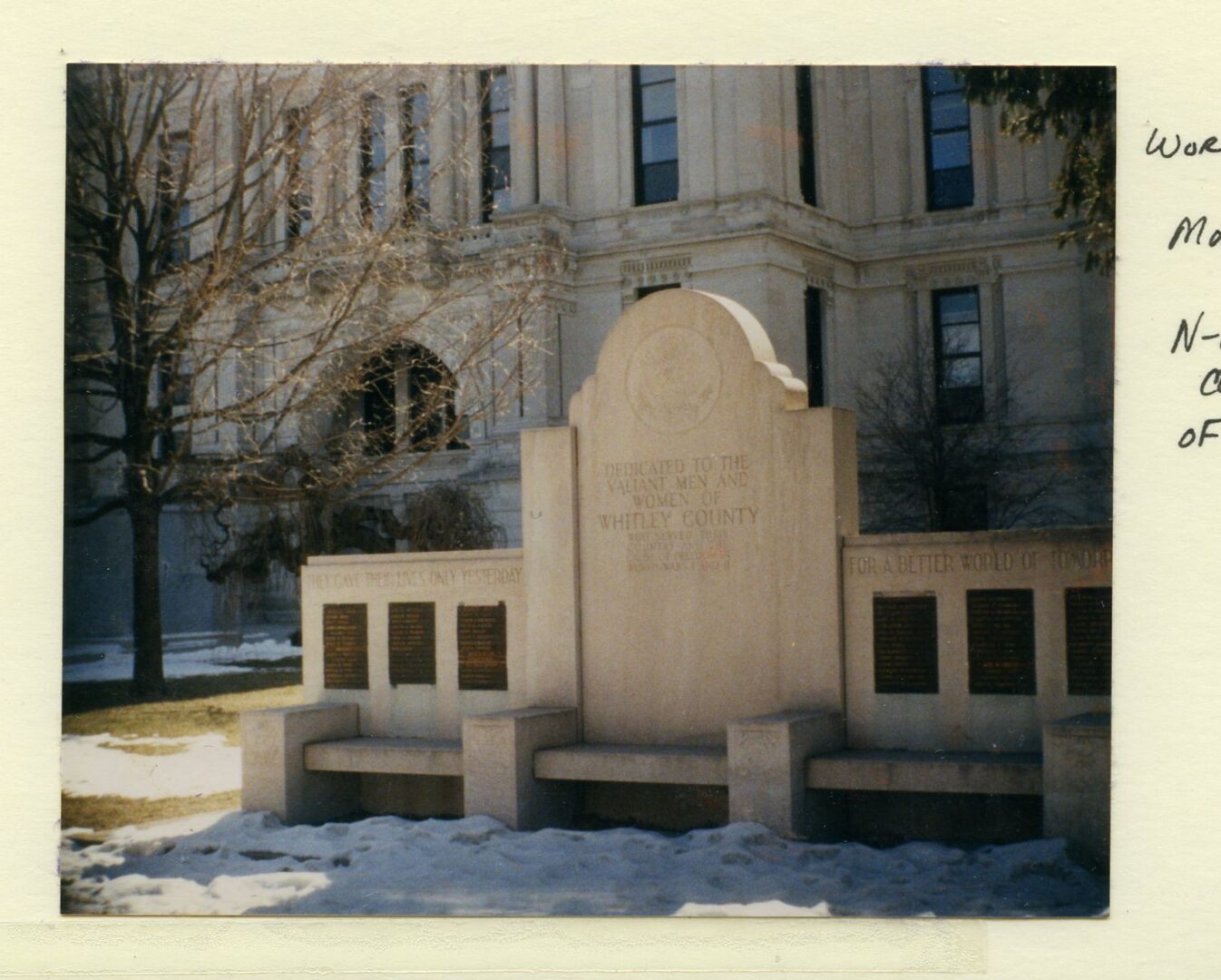
Fitting to highlight in the month between Memorial Day and Independence Day, the seal and the letters are part of the World War I and II Memorial, located on the courthouse square. The seal, subtly engraved near the base of the monument, is that of the National Federation of Business and Professional Women’s Clubs, which contributed to its installation, while the letters are part of the tribute “They gave their lives only yesterday for a better world of tomorrow…”
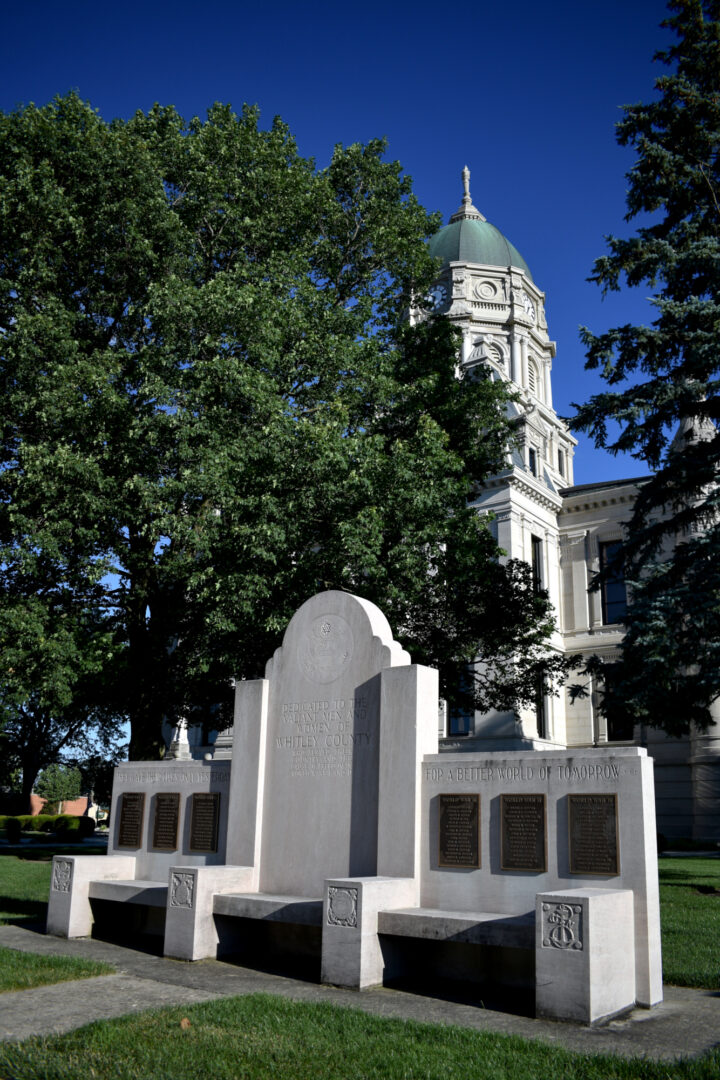
Architecturally, war monuments and memorials in America reflect the country’s democratic foundation. Far too much can be said about the history of monuments to write here, but the collection of memorials and monuments on our courthouse square is representative of the changing nature in memorializing those who served. These include the Civil War/Spanish-American War memorial that lists both those killed in action and veterans topped with a common infantry soldier, to the World War I and II memorial that venerates every name of those killed in action, to the Korean War memorial that remembers both those killed and depicts images of significant battles, to the Vietnam War memorial designed with reference to the Wall in Washington, D.C. Also on the courthouse square are a Civil War “cannon” (a replica that replaced the original scrapped during WWII) and a WWII artillery piece—both being direct reminders of the tools of war.
While not historic buildings, these memorials are an essential part of our community’s history—and our country’s history—both for what they are and for what they represent.
Thank you to Nathan Bilger for providing the recent photos and valuable insights into Columbia City’s architectural history